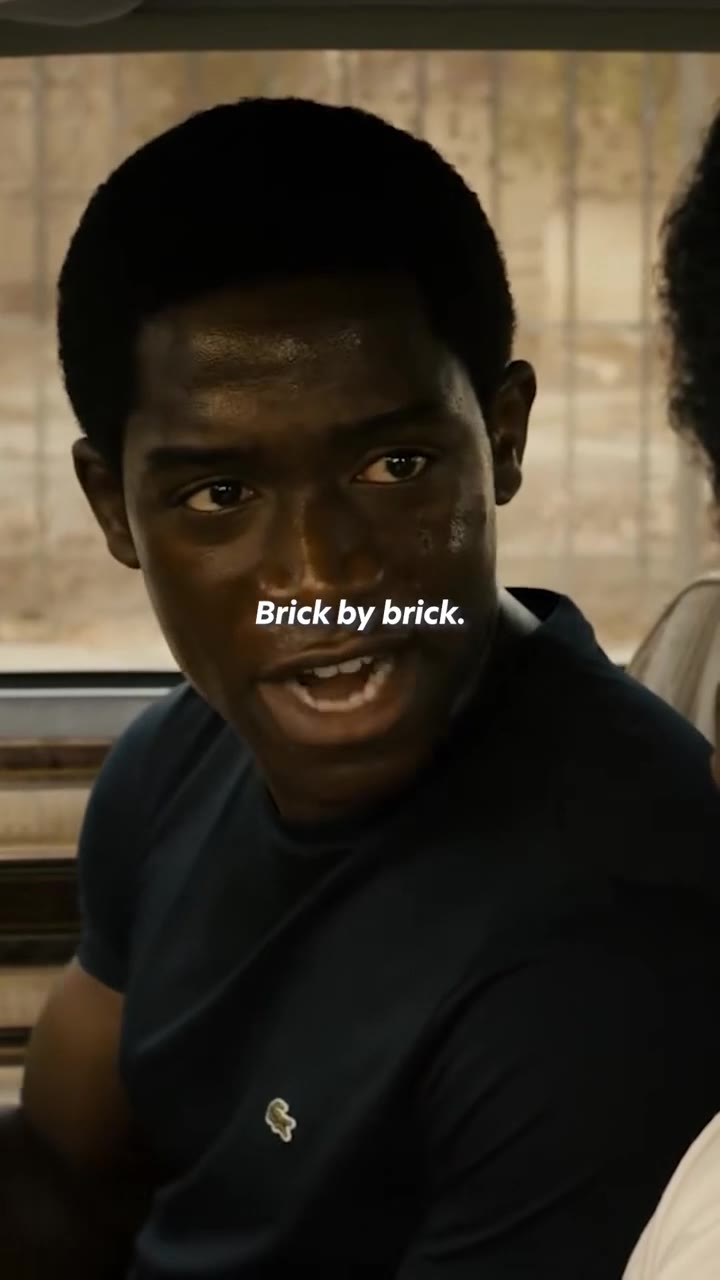
Boy its just alcohol is a March 2024 TikTok barbershop meme in which a customer overreacts to a dab of alcohol and the calm barber says the line. Boy its just alcohol AI is the 2026 version that recreates the clip with two new faces. You can make it from two photos on the boy its just alcohol AI trend page, and you get an 8-second video with the original sound on it.
This guide goes past the basics: how to cast the two roles, why the cape flip fails, the accent-joke sensitivity, and how the 2024 clip became a 2026 template. External references are Know Your Meme and the ByteDance Seed Seedance 2.0 page.
Key takeaways
- The meme is a March 2024 TikTok barbershop clip; AI recreations began around 1 November 2026.
- Send one clear photo per person: the customer first, the barber second.
- The cape flip at 3 to 5 seconds is where errors show, so rerun if it looks wrong.
- The joke is an accent joke, so post with friends who are in on it and turn on the AI label.
- A Standard 720p video costs 10 credits, and one Single pack ($8.90) covers it.
In this guide
- Why did a 2024 barbershop clip become a 2026 AI template trend?
- How do I cast the customer and the barber?
- What photos work best?
- Why does the cape flip fail in AI video?
- What happens beat by beat in the 8 seconds?
- How is the sound handled?
- How is this different from a CapCut template?
- What model makes it, and do I write a prompt?
- How do I post this responsibly, given the accent joke?
- Can I make a pet version?
- What does it cost?
Why did a 2024 barbershop clip become a 2026 AI template trend?
The clip is built on one mismatch: a huge reaction to a tiny cause. A barber dabs alcohol on a seated customer, the customer ducks, throws the cape over his head and flails, and the barber stays flat and says the line. Anyone can read that in two seconds, which is why it was easy to reuse in 2024 and easy to recreate now.
The barber's account, @choppedbystev0, posted it in March 2024, and our check on 14 November 2026 showed more than 88 million plays. Know Your Meme dates the post a day earlier than we do, on 11 March, and notes that people reused the sound from 13 March with reenactments and lip dubs. The wave cooled that year, but the sound never fully left. Around 1 November 2026 AI creators started recreating the barbershop with new faces, and our radar flagged it as emerging on 6 November. That is the path from old meme to new template: a short, fixed scene that new faces can drop into.
How do I cast the customer and the barber?
Treat it like casting a two-person sketch. The customer is the dramatic one, so give that role to the friend who overreacts to everything. The barber is the calm one, so pick the person with the flattest stare. The first photo is the customer and the second photo is the barber, and the order matters because each face stays tied to its own photo.
Good pairings are a sibling and a parent, two friends, or a couple, as long as both adults agreed to be in it. Use one person per photo. The clip has exactly two characters, and a photo with several faces confuses the model. If you only have one picture of both of you, a side-by-side photo can work, but two separate photos are cleaner. You can start on the boy its just alcohol AI page and pick your format there.
What photos work best?
One sharp, front-facing photo per person, with even light. Skip sunglasses and hats, because they hide the features the model needs to hold the face. Make sure the two people look clearly different from each other, so the customer and barber do not swap.
Crop so the face is large in the frame. The scene happens at a barber chair under a cape, so shoulders up is plenty. Do not send photos of children or strangers.
Why does the cape flip fail in AI video?
The flip is the hardest moment. Between about 3 and 5 seconds the customer whips the cape up over his head and flails an arm, which means fabric, hands and a hidden face all change in one beat. Hands and the flipped cape are where invented detail shows first, so you may see a stretched sleeve, an extra finger or a cape that folds the wrong way.
Two things help. First, the render uses the real clip's motion as a reference, which keeps the timing of the flip instead of asking a model to imagine it. Second, run it again if the cape or an arm looks wrong. A failed, timed-out or blocked render returns its credits automatically, so a retry costs you only time.
What happens beat by beat in the 8 seconds?
Knowing the beats helps you judge a result quickly. At 0 to 1 s the customer sits under a black pinstriped cape while the barber stands behind him with a small bottle. At 1 to 2 s the barber dabs toward the customer's face with a calm stare. At 2 to 3 s the customer ducks and twists away. From 3 to 5 s the cape goes over his head and he flails at the barber, who does not move. At 5 to 6.5 s the barber delivers the line with a shrug while the customer glares. From 6.5 to 8 s the customer straightens up, fidgets with the cape and keeps arguing while the barber goes back to work.
If your result misses one of these, it is usually the flip at 3 to 5 s. The trend page shows the same sequence with examples.
How is the sound handled?
The sound is the barber's spoken line from the 2024 clip, posted as TikTok original sound. It is speech, not a song, so there is no artist to credit. videosi lays that original sound on the finished 8-second video after rendering.
That means it is not lip-sync. The recording does not match the new mouths, and it is not meant to. The joke works because everyone already knows the line. If you want to avoid a mismatch, do not expect the barber's lips to sync to the words; judge the video on the reaction and the timing instead.
How is this different from a CapCut template?
A CapCut template swaps clips and effects inside an editor, and you still need footage of two people acting the scene. Here you only provide two photos, and the video itself is generated with the barbershop, the cape flip and the timing built in. Some AI tools offer their own template for it, and creators also remake it in CapCut, but there is no single official TikTok filter.
The output is an 8-second video file, so you can still post it straight to TikTok or import it into CapCut to add captions, cuts or a second angle. Think of the generator as the source footage and CapCut as the finishing step. The boy its just alcohol AI trend page explains the options.
What model makes it, and do I write a prompt?
It renders with ByteDance's Seedance 2.0 or 2.5, depending on the tier you pick. ByteDance Seed describes Seedance 2.0 as a single multimodal architecture that generates audio and video together and accepts text, image, audio and video inputs, with images, audio and video usable as references. That reference idea is what keeps the barbershop motion intact.
The prompt is built in, so you never write one. You choose the photos and the format (9:16, 1:1 or 16:9). Trying to get the same scene from a plain text prompt in a general video model is much harder, because the calm barber and the cape flip are specific.
How do I post this responsibly, given the accent joke?
The original is often described as an exaggerated Southern accent joke, and some people find it offensive. That is worth taking seriously. Make it with friends who are in on it, and think about whether your audience will read it the same way you do. If you are unsure, it is fine not to post it.
When you do post, turn on TikTok's AI-generated content label. TikTok asks creators to label realistic AI content, and the label tells viewers the faces are generated, not filmed. Only use photos of adults who agreed to appear, and tell them the video is AI before it goes public. Do not use anyone's photo as a way to mock them.
Can I make a pet version?
Not on this effect. The boy its just alcohol effect on videosi is built for two people, and we have not tested pets in it: the barber's hands, the flinch and the cape flipped over the head all need a person's body, so a pet photo is not supported.
The joke itself, a big reaction to a small thing, does suit pets, which is why creators use the sound over real pet clips. If you want that, film your pet and add the sound on TikTok; for the AI barbershop, use two photos of adults who agreed to it.
What does it cost?
The 8-second video costs 10 credits on the Standard tier at 720p, and higher tiers cost more. A Single pack is 10 credits for $8.90, so one Standard video costs one pack. Credits do not expire, and a failed render returns its credits.
Given that retries only cost time when a render fails, the practical advice is to get the photos right first. A good pair of photos saves more credits than any other step. Start from the trend page when you are ready. For another two-person prank, see the rubber band prank AI video.