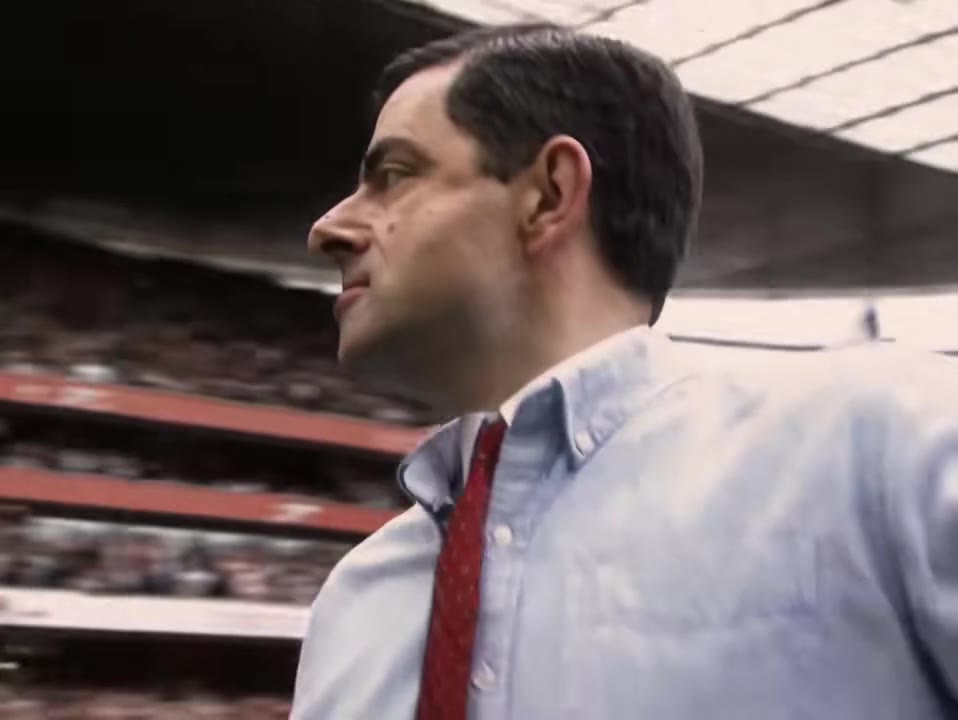
The Zoolander AI meme is a 13-second video in which two rivals trade long, unblinking stares on a red carpet, copied from the 2001 film scene and now rebuilt with AI face swaps. You can make your own by uploading one clear photo of each person to videosi, which returns a finished clip that carries the original trend sound.
Key takeaways
- The format is a 13-second red-carpet face-off: one rival glares over his shoulder, the other strides in with a trophy, and the cuts keep going between the two.
- The film scene became a meme in November 2022; the AI wave started in late February 2026, so these are two different eras of the same joke.
- Almost every shot is a close-up, so photo quality matters more here than in most face-swap trends.
- On videosi a Standard 720p video costs 11 credits, and credit packs start at $8.90 for 10 credits.
- Only use faces of people who agree, and label the result as AI when you post it.
In this guide
- Where does the stare come from?
- Why does the stare scene work so well?
- How do the 2023 deepfakes and the 2026 AI versions differ?
- What happens second by second?
- Why are close-up face swaps so hard?
- How do I pick the right photos?
- Which rival pairs make the best videos?
- What does a video cost and which tier should I pick?
- How do I avoid misuse?
- How should I label an AI video?
Where does the stare come from?
The source is the 2001 comedy Zoolander, directed by Ben Stiller, in which Derek Zoolander is displaced as the top male model by his rival Hansel (Wikipedia). The awards-show moment where the two spot each other is the scene people copy.
The clip only turned into a meme much later. According to Know Your Meme, it took off on 27 November 2022 on TikTok, paired with a "lightskin stare" joke, and spread within days through edits that used a mashup of "Who Is She?" and "The Perfect Girl". No single original creator is confirmed for the 2026 AI version, so this guide does not credit one.
Why does the stare scene work so well?
It is a joke built from almost nothing: two faces, one silence and a cut. The humour comes from the length of the look. A glance would be forgettable, but a look held a second too long reads as rivalry, vanity and menace at once.
It also works as a template because the story is already told. Viewers do not need a caption to know that these two cannot stand each other. Swap in a pair that everyone already sees as rivals, such as two brands, two footballers or two cartoon characters, and the video explains itself in the first two seconds. That is why the format travels across languages and fan communities.
How do the 2023 deepfakes and the 2026 AI versions differ?
In 2023, Spanish-language creators began swapping the two faces for streamers and footballers using deepfake tools. Those edits usually started from the film footage itself and replaced the faces frame by frame, so the red carpet, the lighting and the actors' bodies all stayed from 2001.
The 2026 wave is different. The first AI red-carpet face-off we found is dated 28 February 2026 and was reportedly made with Kling. These clips generate a new scene rather than patching old footage, so the rivals can be anyone, in modern clothes, with a modern venue. The trade-off is that a generated face has to match a real person from scratch, which is harder than editing a face that already sits in a shot.
What happens second by second?
The structure is short and repeatable, which is why so many copies look alike.
- At the start, the first rival has his back to the camera at the red rope while photographers flash behind him.
- Around the one second mark he turns over his shoulder, a sly smile fades and the look hardens into an icy stare.
- At about five seconds the video cuts to the second rival, who strides down the carpet with a gold trophy and a smile.
- Near nine seconds it returns to the first rival in an extreme close-up, eyes fixed on the lens.
- In the last few seconds the second rival steps close and holds a confident smile to the end.
Notice that two of the five beats are pure face close-ups. That detail drives most of the practical advice below.
Why are close-up face swaps so hard?
When a face fills the frame, every flaw is visible. In a wide shot a model can get away with a rough likeness because the eye reads hair, outfit and posture. In an extreme close-up the only thing left to judge is the face, and viewers are very good at spotting a face that is slightly wrong.
There is a second problem in a two-person scene. The model has to keep two different identities apart and not blend them. A common failure is one rival keeping a trace of the original actor's face because the instruction did not name him clearly. Another is a likeness that slips as the head turns. This is why the Zoolander page recommends the Ultra tier for the two-person version, and why the render method describes each rival by hair and outfit instead of saying "stare like the man in the video", which tends to keep the original face.
How do I pick the right photos?
Give the model the same thing a viewer would want: a clear, front-facing, well-lit face. These checks catch most problems before you spend credits.
- Show the whole face, with both eyes visible. Sunglasses and hair over the eyes are the usual cause of a weak likeness.
- Avoid dark, blurry or tiny faces. A cropped selfie beats a distant group shot.
- Face the camera or turn only slightly. Strong side profiles give the model less to work with.
- Use one person per photo. Photo 1 is the rival who turns and glares, and Photo 2 is the one who walks in.
The red carpet, the gold trophy and the venue come from the reference scene, not from your photos, so there is no need to find a photo with a matching backdrop.
Which rival pairs make the best videos?
Pick a pair whose rivalry needs no explanation. Brand against brand, footballer against footballer and friend against friend all work, and so do a pet against a pet or a character against a character, as long as each photo shows a clear face.
Some pairs are better kept private. A joke between two friends who agree to it is fine. A video that makes a real person look like they are feuding with someone is a different matter, even when it is meant as a joke, and it is worth thinking about before you share it widely. Famous people and brands are not endorsed by videosi.
What does a video cost and which tier should I pick?
A 13-second video on Standard at 720p is 11 credits, and an account's first video costs 10. Credit packs start at $8.90 for 10 credits and never expire, and a failed render returns its credits. The higher tiers (Fast, Pro and Ultra) cost more credits per video.
The practical choice is simple. Standard is fine for a first try with strong photos. If the likeness matters, for example because two real faces must both be recognisable, Ultra is the recommended tier for this two-person scene. If a result misses, check the photo before you spend more, since a better photo usually fixes more than a higher tier.
How do I avoid misuse?
The rule is easy to remember: do not use someone's face to make them appear to do or say something they did not. A staring contest is harmless, but the same tool can be pointed at harmful uses, and the same rule covers both.
- Ask first. Use photos of people who agree to be in the video.
- Keep it clearly comic. The format is a joke, so avoid framing the result as a real event or a real statement.
- Do not use it to embarrass, harass or deceive anyone, and delete a video if the person in it asks.
- Be careful with private individuals and with anyone under 18.
How should I label an AI video?
Say it is AI in the caption, in plain words, such as "made with AI". Do this even when the video looks obviously fake, because clips get reposted without their original caption and a label that lives only in your post is easy to lose.
Many platforms also ask you to use their own AI-content toggle when you upload, and it is worth turning on. For a more durable record, the open C2PA standard, delivered as Content Credentials, lets anyone check a piece of content's origin and history of edits. Support varies by app and by file type, so treat it as an extra layer rather than a replacement for a clear caption.
Ready to make one?
Upload two clear photos on the Zoolander AI meme page, pick the red-carpet scene and press Generate. The video comes back at 13 seconds with the original trend sound already on it, and you only need to write the caption that says it is AI.