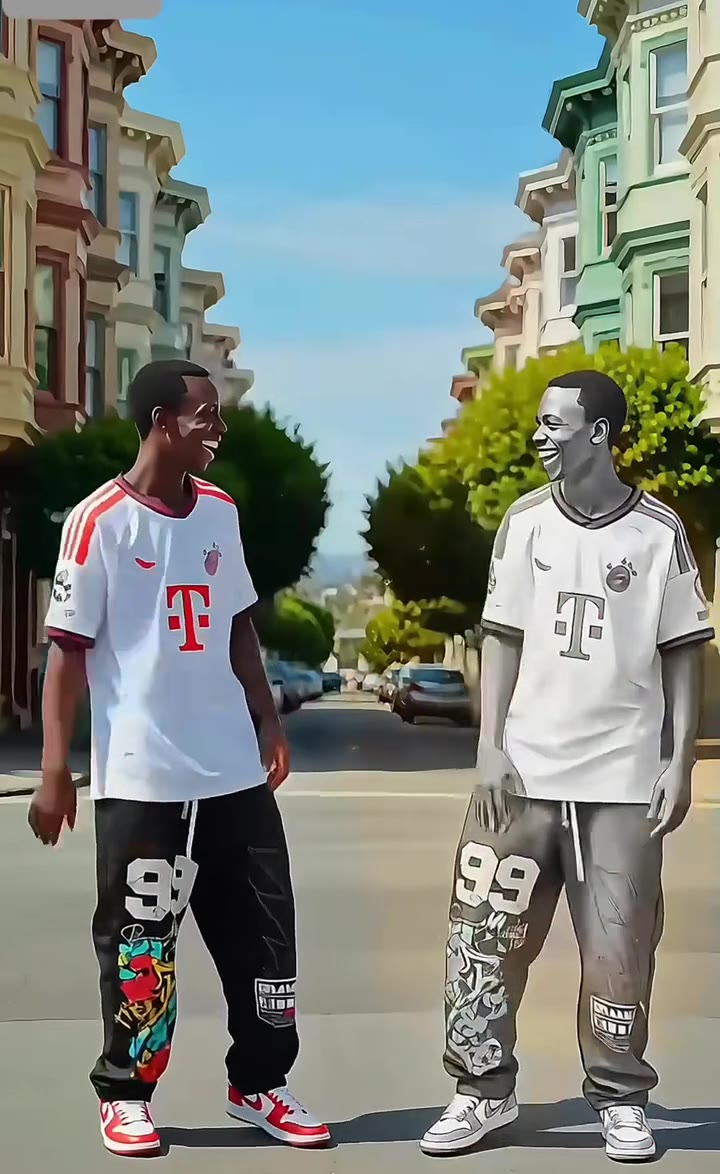
Yes, you can make the tsundere dance, also called the hmph dance, with AI from one photo, and you get a 10 second video of you stomping, folding your arms and giving the sulkiest "hmph" at the camera. Tsundere Dance AI on videosi.io copies the timing of a top real clip, in one fixed full-body phone shot, and puts the trend sound on the result.
This guide goes further than the quick answers on the trend page. It breaks the routine into beats, explains how to film a real version, how to post an AI one, and what to expect on likeness, labels and sound. If you only want to try it, open the tsundere dance AI page and upload a photo.
Key takeaways
- The dance is a 10 second routine: a walk-in, two stomps, folded arms, an arm swing with a kick and a final pout.
- A bright, front-facing, head-to-knees photo of one adult gives the best arms and legs, because the dance is mostly stomps and kicks.
- The trend started around 10 to 13 November 2026, so it is early, and the trend sound is not licensed to you.
- Label the finished clip as AI-generated when you post it, and swap in the platform's own copy of the sound.
- A Standard 720p, 10 second render costs 10 credits (the Single pack is $8.90 for 10 credits), and a failed render returns its credits.
In this guide
- Why does a cartoon cliche turn into a dance?
- What are the moves, beat by beat?
- How do you film a real version yourself?
- What should you wear, and does cosplay help?
- Which photo gives the best AI version?
- Why does the face sometimes not look like me?
- How do you post the AI version without trouble?
- What about copyright, the sound and AI labels?
- How is this different from other dance memes?
- Is it too late, or too early, to post one?
Why does a cartoon cliche turn into a dance?
Because the tsundere character is already a set of physical gestures. A tsundere acts cold or angry on the outside and is soft on the inside, and anime has drawn that for years with the same few poses: crossed arms, a head turned away, a stamped foot and a huffed "hmph". The dance takes those poses and puts them to a beat.
That makes it easy to read in the first second of a clip, even with no context. A viewer sees the stomp and the pout and knows the joke. Cosplayers of Natsuki from Doki Doki Literature Club, a classic tsundere, were among the first to pick it up, and some captions credit an animation by E-Bros Animations as the source. We could not confirm the original post, so treat the origin as open.
The point for a creator is that the humor lives in the attitude, not in difficult choreography. Anyone can do it, which is why the same routine now appears in Russian, Spanish, German and Vietnamese captions. It is also why an AI version works well: the moves are big, simple and clear on camera.
What are the moves, beat by beat?
The routine on the trend page runs about 10 seconds in a fixed, full-body shot. Here is how it breaks down.
- 0 to 2 s, walk-in: the dancer walks close to the phone with one hand raised to the head, then steps back to show the whole body.
- 2 to 4 s, pout and pose: a sulky pose with a hand at the head, eyes looking away from the lens.
- 4 to 6 s, first stomp: one foot lifts and comes down hard, arms swinging. This is the main hmph beat.
- 6 to 8 s, arms out and kick: the arms swing wide with a side step and a kick, while the face keeps its cute scowl.
- 8 to 9.5 s, second stomp: a bigger knee lift and stomp, with the hands curled at the sides.
- 9.5 s to the end, final hmph: square up, fold or swing the arms once more and finish with a pout at the lens.
How do you film a real version yourself?
Prop the phone at about waist height, a few steps away, in portrait mode. The shot never moves, so a tripod or a shelf works better than a hand. Leave enough room that your feet stay in the frame during the kick, because a cropped stomp loses the joke.
Light the face from the front, since the whole dance is an expression. A window in front of you beats a lamp behind you. Play the sound from a second device or a headphone cable so you can hit the stomps on the beat, then trim the clip so the walk-in starts in the first second.
Most people need a few takes to get the second stomp on the beat. The first stomp is easy, and the bigger knee lift of the second one is where timing slips. Practice that one move on its own before you record.
What should you wear, and does cosplay help?
Wear anything that makes the arms and legs easy to see. Because the dance is built around a character type, a costume helps the joke, and the clips with the most attention so far include cosplay looks such as a red wig, a pink-hair Natsuki look and a school-style skirt with a scarf. Plain streetwear works too.
For the AI version, the hair and clothes come from your photo. A cosplay photo gives you a cosplay dance, and a casual photo gives you a casual one. You do not need to describe the outfit anywhere. Just upload the look you want to see moving.
Which photo gives the best AI version?
Pick one adult, standing, facing the camera, from head to knees, in good light. The dance is stomps and kicks, so the model needs your real legs and arms to work from. With only a face crop, it has to invent the rest, and the motion looks less like you.
Keep the face clear. Sunglasses, masks and hats over the eyes make likeness worse, and a second person in the picture can confuse who gets replaced. A plain background helps, because the footwork is easier to follow against a simple floor.
Choose the output format when you generate: 9:16 for TikTok, Reels and Shorts, or 1:1 or 16:9 if you want a square or wide clip. You pick the quality tier too, and the exact price shows before you confirm. A Standard 720p render at 10 seconds costs 10 credits.
Why does the face sometimes not look like me?
Usually because of the photo, not the dance. Dark light, a tilted head or a cropped body gives the model less to hold on to, and likeness drifts during fast moves. Stomps and a kick are fast moves, so a weak photo shows up more here than in a slow trend.
Try again with a brighter, front-facing photo that shows your whole body. If one render still misses, a second photo of the same person in different light often lands better. videosi cannot guarantee likeness, but a failed, timed-out or blocked render returns its credits automatically.
How do you post the AI version without trouble?
Download the MP4 and check it on your phone before you upload. The clip arrives with the trend sound already on it, so you can post it as it is for friends, but for a public post the safer path is different. On the platform, add the platform's own copy of the sound, so it is credited and cleared the way the app expects.
Write a caption that names the joke, such as the hmph, the stomp or the tsundere pout, and keep it short. Add the AI label if the app offers one. A clear label costs you nothing and avoids confusion about whether you filmed it.
What about copyright, the sound and AI labels?
Start with the sound. Most clips use a short original sound with the hmph line, listed under the name Niki, and another version uses a Furina voice line. We could not confirm the artist or the rights holder for either, so treat both as copyrighted. Platforms may mute a post or claim it, and the sound is not licensed to you by videosi.
Next, the photo. Use a picture of yourself, or of an adult who has agreed to it. The page is built for one adult person, so photos of children are not accepted. Using a stranger's photo is a consent problem before it is a technical one.
Last, the label. Say the clip is AI-generated when you post it. This is good practice, and many platforms now ask for it. videosi is also not affiliated with TikTok or CapCut. It is a separate web tool that makes the same kind of clip from a photo.
How is this different from other dance memes?
Most dance trends ask you to learn a sequence of steps. This one asks you to play a mood. The stomp and the pout carry the meaning, so even a rough copy still lands as a tsundere. That is closer to an acting trend than a choreography trend.
It also differs in what you can skip. A sway dance or a club-style routine depends on rhythm across many bars. The hmph dance is built from a handful of loud beats, which is why one photo and 10 seconds are enough to capture it. If you like this style, the AI dance page and the Simple Dimple AI page cover other routines in the same one-photo way.
Is it too late, or too early, to post one?
It is early. The earliest clips we found are dated 10 to 12 November 2026, and a night car-park version posted on 13 November 2026 had about 2.9 million views by 18 November. Other versions with around 2 million views followed within days. As of 18 November 2026 it has only just started spreading.
Early is the best time to post, because the feed has plenty of real clips and few polished takes. A cosplay version or a well-lit solo version can stand out now.
Make the clip while the sound is fresh, and use the tsundere dance AI page to get a first version in a few minutes.