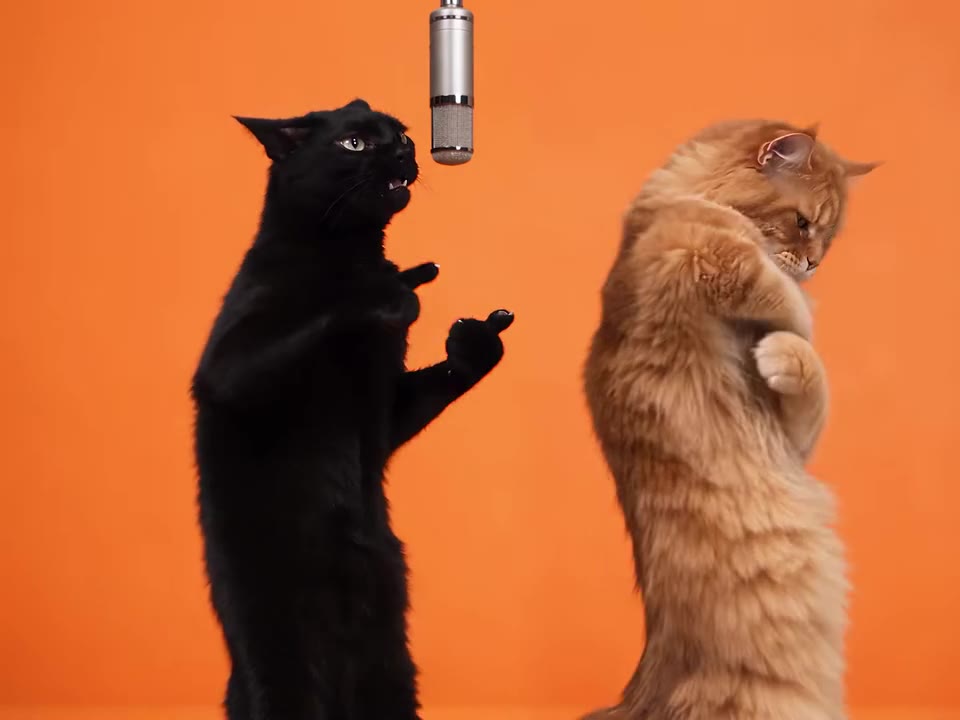
The Toesa quit job AI trend is a short video in which you sing on a TV music-show stage between a giant white rabbit and a brown bear, to the song "I'm gonna TOESA" (퇴사할게여) by SOYEON of (G)I-DLE. An AI generator makes it from one photo of you, with no filming and no dance. This guide goes past the basics of the Toesa quit job AI trend and answers what the word means, where the song comes from, how the video is made and how to get a good result.
Key takeaways
- Toesa is the romanised Korean 퇴사, "quitting your job", and the trend is a cheerful goodbye set to a SOYEON song released on 7 September 2026.
- The stage-debut AI format puts one face between a rabbit and a bear mascot, and is separate from the filmed dance covers.
- A sharp front-facing photo with shoulders visible matters more than anything else.
- Label the result as AI-made when you post it.
- On videosi a first 15-second video is 10 credits, and a pack of 10 credits is $8.90.
In this guide
- What does 퇴사 (toesa) mean, and why is it a song title?
- What is the song, and who is SOYEON?
- How is the stage-debut AI format different from the dance covers?
- Why are there a rabbit and a bear on the stage?
- How does Seedance make the video from one photo?
- What photo works best for the Toesa video?
- Why does the face sometimes drift between shots?
- Does the mouth sing the Korean lyrics?
- Should I label the video as AI-made?
- How is this different from the 2023 Quit-Tok trend?
- How long will the Toesa trend last?
- What does it cost, and is there a free version?
What does 퇴사 (toesa) mean, and why is it a song title?
퇴사 (toesa) is the Korean word for leaving your company, which in everyday use means quitting your job. The song title 퇴사할게여 (toesa-halgeyeo) is the polite, soft form of "I'm going to quit", the kind of sentence an employee says to a boss with a bow. It sounds gentle on purpose, and that gap between a polite tone and a big life decision is part of why the song spread.
The English spelling "Toesa" is just the romanised sound, which is why people search it with Latin letters. When you see "Toesa" in a caption, it stands for a cheerful goodbye to work, not for a brand or an app. The Toesa quit job AI page keeps the trend name as people write it.
What is the song, and who is SOYEON?
The song is "I'm gonna TOESA" (퇴사할게여) by SOYEON of the group (G)I-DLE. It was released on 7 September 2026 as the lead single of her first solo album. On TikTok the sound is credited as "I'm gonna TOESA (Narr. KIAN84)", because a narrator voice sends off the boss between the sung lines.
The track is bright and upbeat, closer to an office farewell party than to a break-up song. That tone is why the same sound works for a dance filmed at a desk, a fan edit, or an AI stage video. On videosi the 15-second part of the track used in the trend is laid over the finished video for you, so you do not have to find the sound.
How is the stage-debut AI format different from the dance covers?
The dance cover is filmed by a real person on a phone: a goodbye bow, a tired slump, peace signs, usually at work or in a cafe. It needs a camera, a place and a willing coworker. The stage-debut format is a different idea. It shows a TV music-show stage with a giant white rabbit on one side, a brown bear on the other, and a singer with a mint-green microphone in the middle, captioned as if the poster had just made their debut.
The earliest stage-debut version we found is dated 12 October 2026. We could not confirm it as the true origin, and the trend is still early. Remakes in this format put the poster's own face on the singer, which is what an AI generator does well. If you want the stage version, the Toesa quit job AI generator builds it from one photo.
Why are there a rabbit and a bear on the stage?
The two mascots are costumed characters that stand on either side of the singer and move on the beat. In the reference clip the rabbit kicks a leg out during the dance break, the bear bounces on the other side, and near the end they stand next to the singer in step. They give the video its music-show feel and give viewers something to react to besides the face.
For AI making they matter for another reason. They are part of what the model has to keep the same from shot to shot, along with the brick-wall set. Without a motion reference, mascots tend to stop dancing on the beat and the stage turns into a generic set. That is why the format needs a reference clip and not only a text prompt.
How does Seedance make the video from one photo?
Seedance is ByteDance's video model. On videosi it receives two inputs: your photo and a 15-second reference clip of the stage. A short built-in instruction tells it who in the reference is replaced by the person in your photo, and what must stay the same, namely the stage and the two mascots. You do not write or paste a prompt.
The model renders the picture, and the trend sound is added to the finished MP4 afterwards. Seedance 2.0 Mini is the default tier, and Fast, Pro and Ultra with Seedance 2.5 are one click away. The trend page has the beat by beat timing, from the wide stage shot to the heart gesture and the mascot close-up at the end.
What photo works best for the Toesa video?
Use a sharp, front-facing photo with your whole face visible from hairline to chin and even light. Show your shoulders, because most shots in the clip are upper body with a microphone in hand, and a photo cropped tight to the face leaves the model to invent the rest.
Leave sunglasses, hats and a hand near the face out of the picture, since they make the likeness drift in the close-ups. Your hair and clothes in the photo are what you wear on the stage, and the stage is bright and colourful, so a solid mid-tone top reads better against the brick set than white or very light colours. Use a photo with one face only: a photo with two people can confuse the swap.
Why does the face sometimes drift between shots?
The reference clip cuts quickly between wide shots and close-ups. In a wide shot your face is small, in a close-up it fills the frame, and the model has to hold the same identity across both. Likeness can slip between them, and it is not guaranteed.
Three things help. A better photo is the first one. The Ultra tier is the second, because it keeps a face steadiest through the cuts. The third is to expect more than one try: each retry costs credits, so check the photo before you press Generate. A failed or blocked render returns its credits automatically.
Does the mouth sing the Korean lyrics?
No. The mouth does not follow the Korean lyrics word by word, so the result reads as a performance to the track, not as an exact lip-sync.
If you want true lip-sync, the honest route is to record your own lip-sync clip in TikTok or CapCut with the original sound. The AI stage video and a lip-sync clip are two different kinds of post, and some people make both.
Should I label the video as AI-made?
Yes. TikTok and Instagram both ask creators to label realistic AI-generated content, and a video of you on a TV stage with giant mascots is exactly the kind of clip that gets the label prompt. Turn the AI label on when the app offers it, and say in the caption that you made it with AI.
Use photos only of people who have agreed to it, such as yourself, a friend or a colleague. Do not use a photo of your boss, a child or anyone you want to mock without consent. A friendly caption such as "I debuted too" fits the format better than a joke at someone's expense.
How is this different from the 2023 Quit-Tok trend?
The 2023 wave, which people called Quit-Tok, was about real resignations: workers filmed themselves quitting, or told the story of leaving a job, and the clips were about the real workplace. The Toesa trend is not a record of a real resignation. It uses the word 퇴사 as a theme, a cheerful, theatrical goodbye set to a pop song, and the AI stage video is pure fiction, a debut on a music-show stage.
That difference matters if you work somewhere and want to post. A Toesa video with a bow and a smile is a mood. It is not a notice, and nobody should read it as one. If you do plan to leave your job, the fictional stage video can be a fun way to celebrate, posted after you have told your employer.
How long will the Toesa trend last?
Nobody can promise a date. The song came out on 7 September 2026, and the stage-debut version appeared on TikTok in October 2026, so the song is older than the AI format. As of November 2026 the format is still spreading, and we treat it as early.
Music-led formats tend to last as long as the song stays in the feed, and the debut caption is easy to reuse on new occasions. If you want to join, there is no benefit to waiting for the peak. The Toesa quit job AI page lists the changelog with the date it was last updated.
What does it cost, and is there a free version?
There is no free generation and no free trial for this effect. A first 15-second video on the Standard model at 720p costs 10 credits, and a pack of 10 credits is $8.90. Higher tiers cost more credits.
The download is an MP4 with no watermark and with the trend sound already on it. If a render fails or is blocked, the credits are returned automatically. A second try for a better likeness is a second charge.
To try the format yourself, open the Toesa quit job AI page, upload one photo and generate the 15-second stage video.