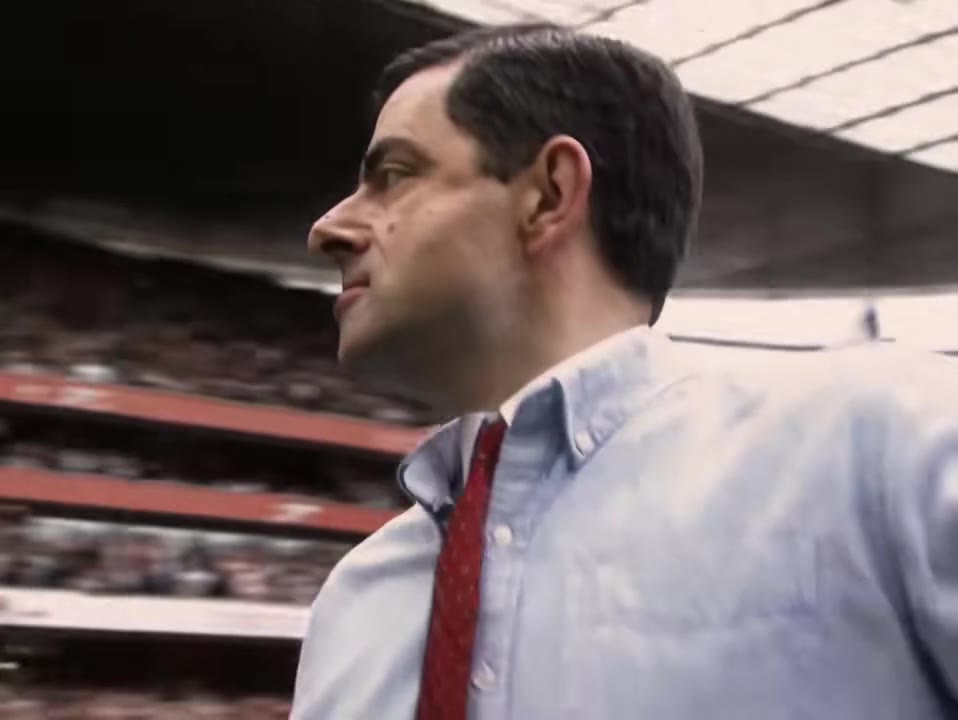
The reverse hurdle AI trend puts your face on a runner who spins past one defender and jumps backwards over the next, and you can make it from a single photo. The real move is Saquon Barkley's backward hurdle against the Jaguars on 3 November 2024, and the AI version is a 7-second video that videosi renders for 10 credits.
This guide goes past the basics on the trend page. It covers how the play worked, why it is hard to fake, why most AI tools fumble it, and how to pick a photo that survives a wide stadium shot.
Key takeaways
- The original play happened in the Eagles' 28-23 win over the Jaguars on 3 November 2024, when Barkley hurdled a defender with his back to him.
- The AI version swaps one runner in a real stadium clip for the person in your photo, so the spin, the leap and the camera are all real motion.
- The face is small in a wide shot, so a sharp, bright, single-person photo matters more here than on most trends.
- A video with your face on game footage looks real, so keep the AI label on when you post.
- Cost on videosi: 10 credits on the Standard model at 720p, credit packs from $8.90, and a failed render returns its credits.
In this guide
- What actually happened in the original play?
- Is a backwards hurdle allowed in football?
- Why is the reverse hurdle so hard to do?
- Why do most AI video tools get it wrong?
- How does a photo become the runner?
- Which photo works best?
- Why does the face drift in this clip?
- Does the video keep the stadium sound?
- How should I label the video as AI?
- What does one attempt cost and what if it fails?
- Who is this video good for?
What actually happened in the original play?
In the second quarter at Lincoln Financial Field, Barkley caught a pass from Jalen Hurts, beat a defender with a spin, and was left facing sideways when Jaguars cornerback Jarrian Jones came in low. Instead of hurdling forwards, Barkley leapt backwards over him. Sports Illustrated describes the sequence as a spin past two defenders followed by the backwards hurdle, and quotes the NFL's own account saying it had never seen this before.
The local ABC station 6abc calls it a split-leg, backward leap that helped set up a field goal and a 10-0 Eagles lead. The game ended 28-23. The reports differ by a yard on the gain (14 or 15), so we do not quote a number here.
The AI trend borrows that exact shape: a catch, a spin, a backwards jump, then a pile of players.
Is a backwards hurdle allowed in football?
None of the reports we opened describe a penalty on the play, and the Eagles kept the gain, so in practice it counted as a normal run after the catch. We did not find a rule text that addresses a backwards hurdle specifically, so we will not claim to know the rulebook wording. For an official answer, check the league rulebook.
What matters for the AI version is simpler: nothing in the clip is a real game, a real penalty or a real result. It is a fan video.
Why is the reverse hurdle so hard to do?
A normal hurdle faces the defender, so the runner sees the target, picks a take-off point and clears it. A reverse hurdle turns that around. The runner has their back to the defender, jumps without watching the landing and has to keep hold of the ball while rotating. Reports describe it as a reaction to being turned sideways mid-play, which suggests instinct and years of reps rather than a planned move.
The timing is the other half. The defender dives at the legs, the runner must leave the ground at the right instant, and a spin right before the jump leaves almost no room to adjust. That mix of rotation, height and timing is exactly why a single frame of it spread.
Why do most AI video tools get it wrong?
Video models learn from what they have seen most, and forward hurdles are far more common than backward ones. If you type a description of a backwards jump from scratch, the usual result is a forward leap, a floating player or a defender who disappears. The motion is simply rare.
There is a second problem. Without a real clip to follow, the model invents the stadium, the jerseys and the camera, so you get a generic player in a generic place, not this moment. The fix is to give the model the real motion as a reference and only ask it to change who is running. That is how the videosi page works, and it is why the result follows the actual play.
How does a photo become the runner?
videosi runs ByteDance's Seedance 2.0 or 2.5 (you pick the tier) in a photo plus motion reference mode. Your photo supplies the face, hair and outfit. A short reference clip supplies the spin, the leap, the camera and the crowd. The instruction only names which runner in the clip becomes you and says to leave the defenders and the pile alone.
Naming the runner matters. If the instruction does not say who to replace, the original player often stays in the video and your photo is ignored. We do not publish the full prompt, and a copied one rarely behaves the same without the reference clip behind it.
The result is 7 seconds with no cuts, in 9:16, 1:1 or 16:9. You can start it on the reverse hurdle AI page, close the tab while it renders and find the file in My creations.
Which photo works best?
Pick a photo with these traits:
- One person only. The video swaps one runner, and two people in a photo can be blended or confused.
- Head to hip or full body. The runner's whole body moves, so more body gives the model more to work with.
- Even, bright light. A stadium is bright and green, so daylight or good indoor light blends better than a dark or heavily filtered image.
- No hat or sunglasses. Anything over the face makes the likeness drift.
The clothes in your photo are the clothes you wear in the video, so choose an outfit you are happy to see on the field.
Why does the face drift in this clip?
The shot is wide and the runner is small, which means the face may be only a few dozen pixels tall for much of the clip. Small faces are the first place a likeness slips, because the model has little detail to hold on to while the body spins. Likeness is not guaranteed.
If the first result looks off, the cheapest fixes are a sharper and closer photo, a plainer background in the photo and, if the original player still shows up, trying a higher tier. The Standard tier is the cheapest and can leave the original runner in the frame more often.
Does the video keep the stadium sound?
Yes. The finished video carries the original game sound, which is crowd noise and broadcast audio, not a song. The sound is added after the video is made, so it is not something the model generates. If you want a music track instead, you can swap the audio in any editor before posting.
How should I label the video as AI?
A reverse hurdle with your face looks like real footage, and real footage of this play is already famous, so viewers may assume it is genuine. Turn on the platform's AI-generated label when you upload to TikTok, Instagram or YouTube. videosi does not put a watermark on the file, so the label you tick is what tells people it is AI.
A short caption helps too, for example "AI version, not a real game". The clip uses a real stadium moment, so do not present it as an actual match, and do not add a team name or logo that is not there.
What does one attempt cost and what if it fails?
A 7-second reverse hurdle is 10 credits on the Standard model at 720p. Credit packs start at $8.90 and higher tiers cost more credits. If a render fails, times out or is blocked, the credits come back automatically, so a bad render caused by the system does not cost you anything.
If the render succeeds but you dislike the likeness, that counts as a finished video, so it is worth spending a minute on the photo before you press Generate.
Who is this video good for?
It suits a few simple uses:
- A joke for a group chat, where your friend becomes the player.
- A birthday or fan-club clip for a football-loving friend who has given permission.
- A sports-account post that plays on the original highlight.
Only use photos of adults who have agreed to it. If you want the same idea for another sport, the related pages on videosi cover the soccer missed goal and basketball dunk formats. For this one, the reverse hurdle AI page has the sample clip and the three formats.