The love handstand is a short TikTok video in which a person goes into a headstand and opens their legs into the V of the word LOVE. It is a stunt, and videosi can make the video from one full-body photo of you so you do not have to do it on the floor.
This guide goes past the basics on the trend page and answers the deeper questions: why the letters leave a gap, how to film a real one safely, why AI struggles with it, and why the trend name and song are unclear.
Key takeaways
- The word LOVE is laid over the video as LO and E with a gap, and open legs form the V.
- The AI version needs one clear full-body photo and makes a 14-second clip with the trend sound.
- Upside-down bodies are hard for video models, so likeness and limbs are not guaranteed.
- The origin and the song are not confirmed, so we name no official creator.
- Turn on the AI label when you post.
In this guide
- Why does the love handstand leave a gap between LO and E?
- What is the difference between a headstand and a handstand in this trend?
- Why is the LO_E shot usually a silhouette?
- How do I film the real love handstand safely?
- Why do AI videos struggle with upside-down bodies?
- How do I pick the right photo for the love handstand AI video?
- What does the AI version change, and what stays the same?
- Why is the love handstand also called the love me trend?
- Why is the song behind the love handstand unclear?
- How should I label and post the AI love handstand?
Why does the love handstand leave a gap between LO and E?
The gap is the whole trick. The word LOVE is laid over the video as LO on the left and E on the right, with the middle left empty so that a pair of open legs can stand in for the letter V. When the legs open in that space, the eye reads L, O, V, E in one glance.
That is also why the timing matters. In the 14-second clip the legs only open into the V around seconds 9 to 12, and that is the moment the word reads. Before that the body is still kicking up, and after it the performer folds down. The lettering stays fixed in the frame, so the performer has to line up with it, not the other way around.
What is the difference between a headstand and a handstand in this trend?
The trend is called the love handstand, but the posts show both moves. A headstand keeps your head on the floor with your hands beside it, while a handstand lifts the head off the floor and puts all the weight on the hands. Some of the examples we found are headstands, and others are on parallettes, which are small raised bars for the hands.
For the video it makes little difference, because only the open legs in the gap matter. The AI version follows the headstand route: the performer kneels, puts hands and head down, kicks up and opens the legs. The page badge says headstand V for that reason.
Why is the LO_E shot usually a silhouette?
Many of the posts use a dark outfit against a light wall. A dark shape on a plain background makes the legs easy to read as a V, and the white letters stay clear next to it. Most posts run 8 to 14 seconds and are shot on a phone propped on the floor, so the framing stays steady.
If you plan a real version, copy that logic: plain wall, fitted dark clothes, a still camera and enough room beside the gap for the legs to open.
How do I film the real love handstand safely?
This is a stunt, and the page says so plainly. If you cannot hold a headstand, do not try the real version on a hard floor. Learn it with a mat and a spotter, and stop if your neck or wrists hurt.
Some practical points that follow from how the clips are shot:
- Use a clear floor with nothing sharp or breakable within leg reach.
- Put the phone on the floor, propped and still, so you can step back and kneel in frame.
- Practise the kick-up without the camera first, then film.
- Keep the legs in the gap only for a moment. The V reads in a short beat.
If any of that sounds like a risk you do not want to take, the AI version exists for exactly that reason: you stay on your feet and the video is made from a photo.
Why do AI videos struggle with upside-down bodies?
A flip changes everything at once: the face is upside down, the legs cross the frame, and the body moves from standing to inverted in a few seconds. Video models learn most from upright people, so inverted poses are harder for them to keep consistent. The page lists this in its notes: flips and leg positions are hard for any video model, so expect an odd limb on some tries, and the letters may shift slightly.
Two other limits come from the same cause. The face is upside down for most of the clip, so likeness is hardest here and is not guaranteed. And the room, the LO and E lettering and the camera come from the original clip, so you do not choose the background.
If a try goes wrong, a failed, timed-out or blocked render returns its credits automatically. See the details on the love handstand AI page.
How do I pick the right photo for the love handstand AI video?
Use one clear, well-lit, full-body photo of you standing from head to feet. The clothes and hair in your photo are the clothes and hair in the video, and your photo is the only source for the performer's face, hair and outfit.
- Show your whole body. A headstand moves everything, so a head-to-feet photo works better than a close-up.
- Wear what you want to see. Plain, fitted clothes keep the legs clean in the V.
- One person, empty hands. Bags, scarves and long coats get redrawn when the body flips.
- Use even light. A bright, even photo helps the face survive the upside-down frames.
What does the AI version change, and what stays the same?
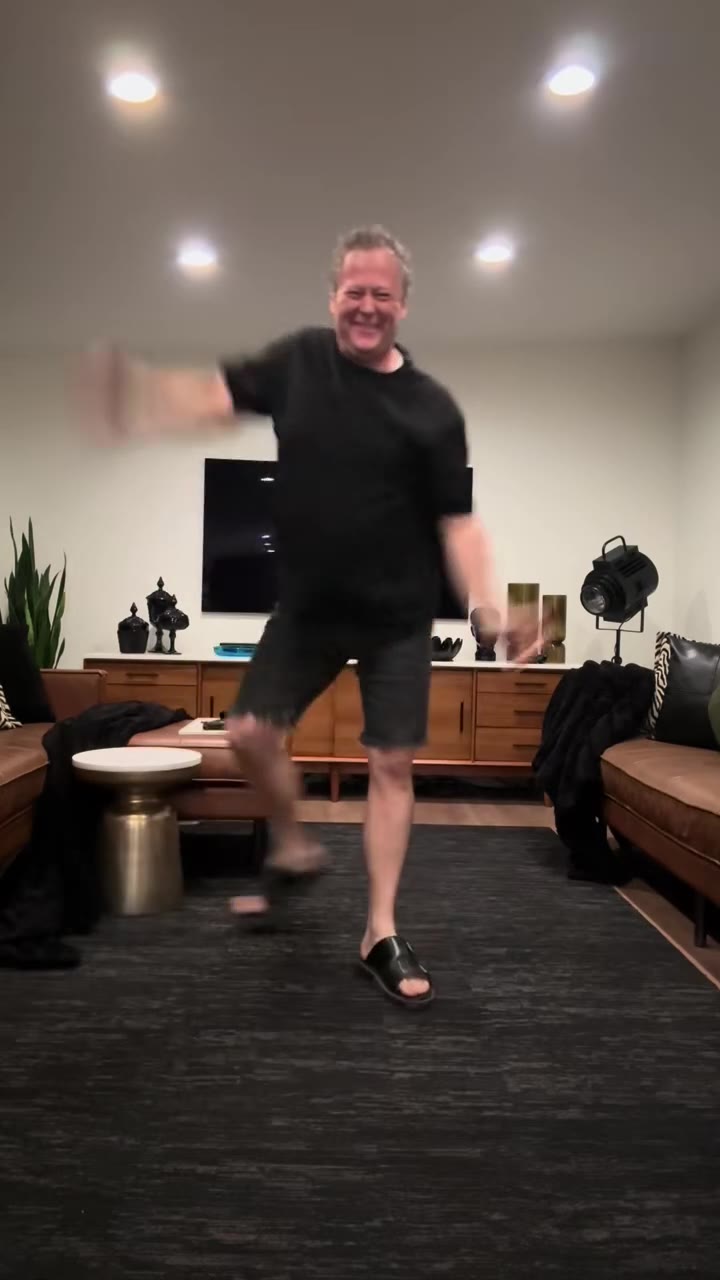
The model replaces the woman in a real living-room clip with you. What changes is the person: face, hair and outfit come from your photo. What stays is everything else: the room, the lettering and the camera, plus the motion of the kneel, the kick-up, the open V and the fold down.
The beats run in order: setup in the first 3 seconds, hands and head down until 6, the kick-up until 9, the V until 12, and the come-down to 14. The MP4 already carries the trend sound, so there is nothing to add afterwards. Choose 9:16 for TikTok, Reels and Shorts, 1:1 for a feed post or 16:9 for a wide view.
Why is the love handstand also called the love me trend?
Many captions use the tags #loveme and #handstand, so people search for the trend under both names. The name comes from how people tag and search it, not from an official title.
The earliest posts videosi found are from 15 November 2026, and no original poster is confirmed. A template site says the first post went up on 12 November, but we could not confirm that. Because the origin is not settled, this guide does not name an official creator.
Why is the song behind the love handstand unclear?
Most posts use a TikTok original sound. A few list JMSN's song Love Me instead, which is a possible match but is unconfirmed, and we have not confirmed that they are the same recording.
That is why the trend name and the song can look like they point at each other without proof. If the exact track matters to you, check the sound on the post you are copying. For the AI video you do not need to decide: it comes with the trend sound.
How should I label and post the AI love handstand?
Turn on the AI label when you post it. The video shows a stunt you may not have done, and the label keeps that honest for viewers. It also fits the page's own advice for a trend that is easy to mistake for real footage.
A simple caption works: say it is an AI version of the love handstand and add the tags people already search, such as #loveme and #handstand. The clip is already vertical at 9:16 if you picked that format, so it is ready for TikTok, Reels and Shorts.
To try it, credit packs start at $8.90 for 10 credits, and you can start from the love handstand AI page.
Ready to try it? Open the love handstand AI page, upload one full-body photo and generate your 14-second clip.