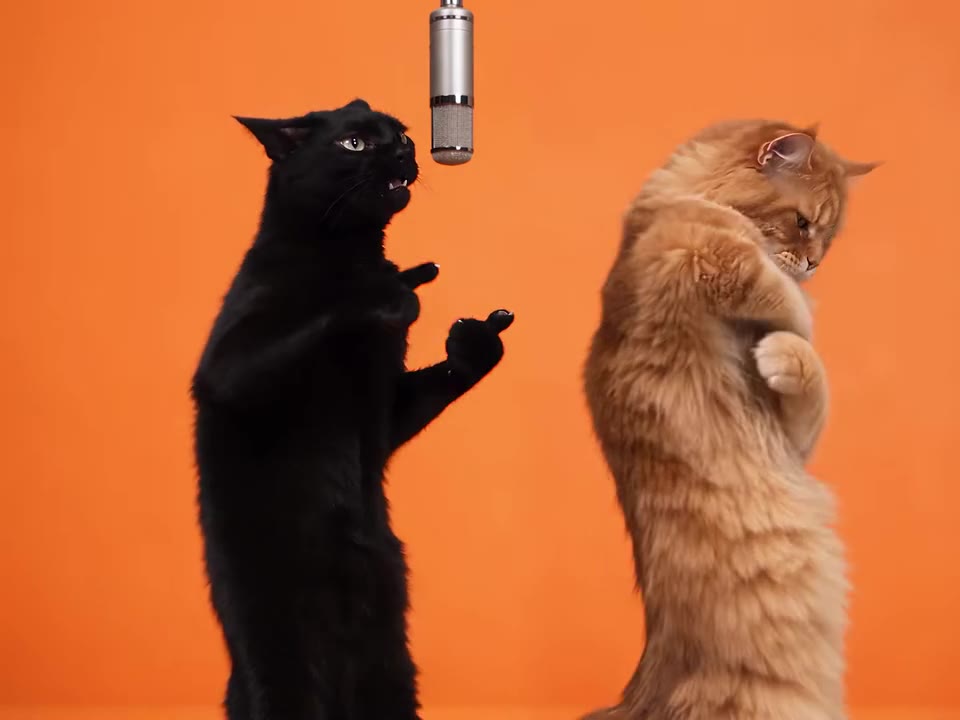
La Calabaza AI is a way to put your own pet into the 14-second meme in which three small cats dance upright to a Latin club beat. You upload one full-body photo, the model turns it into three copies of your animal, and the finished video comes back with the trend sound already added.
This guide goes deeper than the page FAQ: why the format works, how to choose a photo, what to expect from dogs and from the human version, and why the trend is fading in November 2026. The short version is that it is a fun, low-effort video, but the peak has passed.
Key takeaways
- La Calabaza is a 14-second meme from late August 2026, and videosi turns it into a one-photo video for pets or people.
- Halloween 2026 has passed and the trend is fading as of November 2026, so treat it as a plan for next pumpkin season.
- The photo decides the result: one animal, full body, sharp, facing the camera.
- Likeness can drift, so expect to rerun some pets; a failed render returns its credits.
- A 14-second video is 12 credits on Standard 720p (your first video costs at most 10); the Single pack is $8.90 for 10 credits.
In this guide
- Why do the cats dance upright on two legs?
- How does the human flexible-dancer version work?
- Halloween 2026 has passed, so is it still worth making one?
- What is the song, and what is its only lyric?
- How do I pick the right pet photo?
- Can dogs work, or only cats?
- Why are there three copies of one pet?
- Why does my pet's likeness sometimes drift?
- How is this different from video-editing app templates?
- Do I need to label the video as AI when I post it?
- What does a La Calabaza AI video cost?
Why do the cats dance upright on two legs?
The whole joke of the clip is that real cats never stand like this. Three small kittens rise onto their hind legs, spread their front paws and move in sync, so they read as tiny dancers instead of animals. That mismatch between a cat's body and a club choreography is what made the clip easy to repeat and easy to remember.
The routine is also very readable. It runs 14 seconds and has six clear beats: heads down, arms out, the shimmy, back turned, turning back, and a bounce toward the camera. Because every beat is distinct, a viewer can describe it in one sentence, and that makes it simple to swap in a different animal while keeping the same motion.
How does the human flexible-dancer version work?
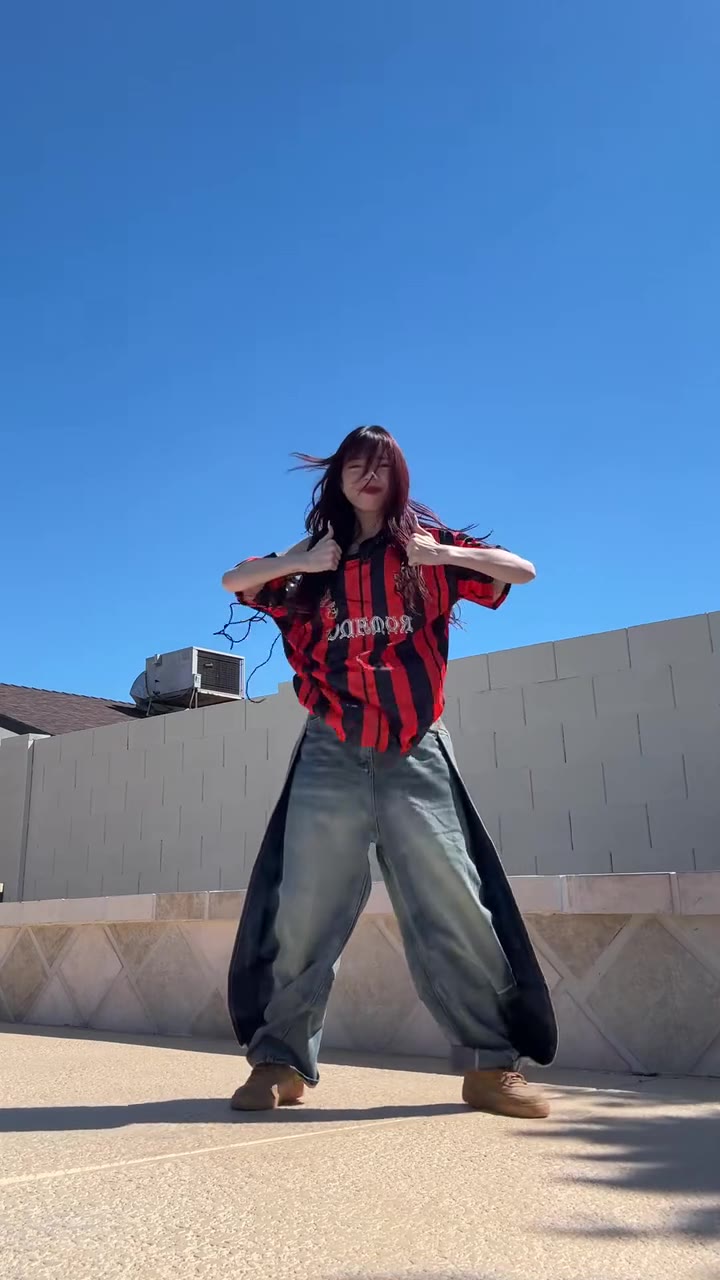
The same choreography exists with a real person, and that version is also popular, at roughly 22 million views on the clip we checked (unconfirmed). On videosi it has its own card called Flexible dancer. You upload a full-body photo of one adult facing the camera, and the dancer in the reference is replaced by the person in your photo. The result is 14 seconds long and carries the same sound as the cat version.
Be realistic about this card. The routine includes a backbend and a floor crawl, and the model can warp limbs and hands in those moments. If the first result looks off, run it again. Two or three tries is normal for the dancer card, and a failed render returns its credits.
Halloween 2026 has passed, so is it still worth making one?
Honestly, the peak is behind us. As of November 2026 the trend is fading: the clip has been circulating since late August 2026, grew through October when the cats got pumpkin costumes and Halloween backdrops, and has now passed the holiday. The cat clip itself still has millions of views, but it is no longer on the rise.
That does not make it useless. A video of your own pet dancing is still funny in November, and nothing about the format expires. If you want to catch the trend at its strongest, though, plan for next pumpkin season, when costume edits and dog versions are likely to come back.
A practical plan for next year looks like this:
- Save a sharp, full-body photo of your pet now, ideally one that already looks good in costume.
- Post early in the season, not on Halloween night, when every feed is already full of pumpkin clips.
What is the song, and what is its only lyric?
The sound is "LA CALABAZA (TINIEBLA Edit)" by the producer Pumpky, according to the track listing on a copy of the clip whose audio matches our reference. Many other posts list the audio only as an original sound, so you will often see it without a credit. The beat is a Latin club track.
The only lyric is the repeated phrase la calabaza, which is Spanish for the pumpkin. There is no verse and no chorus in the usual sense, just the hook over the beat.
How do I pick the right pet photo?
The photo matters more than any setting you choose later. The model has to rebuild your pet as an upright dancer, so it needs to see the whole animal clearly.
A good photo has these qualities:
- One animal only, so the model knows which pet to copy.
- The full body, head to paws, not a close-up of the face.
- Facing the camera, with the ears and eyes visible.
- Sharp focus and even light, so the coat colour and markings are clear.
- A plain or uncluttered background, so the pet does not blend into it.
The usual failure causes are a photo that shows only a face, a photo with two animals, and a blurry coat. If a render comes out wrong, swap the photo before changing anything else. Very fluffy coats and rare markings drift the most, so expect to try more than once with those pets.
Can dogs work, or only cats?
Dogs work. Dachshund versions are among the copies people have shared, and videosi accepts a dog or any pet that is yours or that you have permission to use. The rule is the same as for cats: one whole-body photo of one animal.
What changes is the body shape. A long-bodied or short-legged dog has to stand upright in a pose that was designed around a kitten, so you may see slightly stranger proportions. That is part of the humour for many people, but if you want a cleaner result, choose a photo where the dog sits or stands in a tall, straight pose.
The three cats in the reference become three copies of your pet. Giving each position a different pet is not supported yet.
Why are there three copies of one pet?
The reference clip has three kittens in a row, one cream, one white in a black cowboy hat and one black and white with round glasses. The card replaces all three positions with the same animal from your photo, so the formation stays intact: the middle one leads the shimmy, and the trio bounces toward the camera at the end.
Keeping one pet in all three slots also keeps the result stable. One input photo means one likeness for the model to hold, which is easier than matching three different animals at once.
Why does my pet's likeness sometimes drift?
Likeness is the hardest part of any AI video, and we do not guarantee it. The model rebuilds your pet from a single still image while also inventing the angles it cannot see, such as the back of the head and the tail when the cats turn around at about seven seconds. Details like a small patch of white fur or an unusual eye colour can change.
Drift is most common with very fluffy coats, rare markings, and photos where the pet is partly hidden. It is least common with short-coated animals photographed in good light from the front.
If the result is close but not right, try these steps in order:
- Replace the photo with a sharper, more frontal one.
- Rerun the same photo once, since each render is a fresh attempt.
- Try a different model option if the first one smoothed out the markings.
How is this different from video-editing app templates?
There are editing-app templates and tutorial videos for La Calabaza, and we could not confirm an official TikTok filter. A template usually asks you to drop your photo into a slot, and the result is often a flat cutout moving around, or a face pasted on a fixed animation.
An AI render works differently. The model generates new frames in which your pet itself dances, with the body turning and bouncing in 3D-like motion. You do not edit anything: you pick a card, add one photo and press Generate. The trade-off is that a template is predictable and an AI render can drift, as covered above. Choose a template when you need exact control and the AI card when you want the pet to look like it is really performing.
Do I need to label the video as AI when I post it?
Yes, you should. Platforms increasingly ask creators to disclose AI-generated content, and a video of an upright dancing cat is clearly synthetic, so labelling it costs you nothing. Use the platform's own AI label setting when it exists, and add a short note in the caption if it does not.
Only post pets you own or have permission to use, and use a full-body photo of an adult if you make the human version. The video already carries the trend sound, so you can download it and post it directly.
What does a La Calabaza AI video cost?
A 14-second video costs 12 credits on Standard 720p, your first video costs at most 10, and the Single pack is $8.90 for 10 credits. Higher models and resolutions cost more, and the generator shows the credits before you press Generate, so there is no surprise at the end. A failed render returns its credits.
If you want to try it, open the La Calabaza AI page, pick the Three dancing cats card, and upload your photo.
The bottom line
The trend is past its peak, but the format is simple and the pet version is forgiving. If you want to try it now, start from the La Calabaza AI page, and keep your best pet photo ready for next October.