The 8 Mile rap battle AI trend is a 9-second video in which your face replaces the rapper in the final battle scene of the 2002 film 8 Mile, with the original battle sound kept. You can make one on videosi's 8 Mile rap battle AI page from a single photo, with no prompt and no editing.
Key takeaways
- The clip is 9 seconds long and has four shots: a side view at the mic, a turn to camera, and two close-ups that end on the last line.
- One sharp photo of one person looking at the camera gives the best likeness, because the last two shots are extreme close-ups.
- The sound is the film's final battle verse and contains strong language, so check the platform's music rules before posting.
- A 9-second video (Standard model, 720p) costs 10 credits, the same as one Single pack, and credit packs start at $8.90 for 10 credits.
- Label the result as AI when you share it, and only use photos of people who agreed.
In this guide
- How is the scene built shot by shot?
- Why do close-ups drift away from my face?
- How do I choose the right photo?
- Can I use the film sound, and what about the profanity?
- What are the posting rules and AI labels?
- Why did the cat, baby and footballer versions go viral?
- What is the difference between a CapCut template and videosi?
- How long does it take?
- Why not just describe the scene to any video model?
- Does the mouth follow the lyrics?
How is the scene built shot by shot?
The finished clip runs 9 seconds and follows the order of the film's battle in four shots. The first is a side view of the rapper at the microphone. The second is a turn to the camera. The third and fourth are close-ups, and the second close-up ends on the last line of the verse.
That order is fixed on purpose. On videosi a 9-second reference clip of the battle supplies the stage, the crowd, the hand holding the mic and every camera push. Your photo only replaces the rapper: face, hair, clothes and skin tone come from the photo in every frame. Everything else stays as in the reference, including the lights, the crowd and the microphone.
There is one more rule inside the build. The reference rapper wears heavy costume makeup, and the instructions tell the model to drop it, so your own face is not painted. You can see the result on the 8 Mile rap battle AI page, which shows four example videos before you pay.
Why do close-ups drift away from my face?
Faces drift most in extreme close-ups. The last two shots of this scene are exactly that, so they are where a video model is most tempted to slide back toward the face in the reference clip instead of staying with yours.
Three things make it worse. A small photo gives the model few pixels to copy. A tilted head or a cap pulled low hides the features the close-up needs. A photo taken from far away carries no detail about your eyes, nose or jaw. When any of these is true, the model fills the gap with its own guess, and the guess looks less like you.
The build includes a close-up rule that tells the model to keep your face shape in those shots. It helps, but likeness is not guaranteed. If the first result drifts, the fix is almost always a better photo, not a longer wait.
How do I choose the right photo?
Pick one sharp photo of one person looking at the camera. Make sure the face is large in the frame, the lighting is even, and nothing covers the eyes or forehead. Sunglasses, a cap and a heavy filter all reduce likeness.
Hair and clothes matter more than people expect, because the photo supplies both. If you want a hoodie and a beanie in the battle, wear them in the photo. If you want your hair loose, show it loose. Photos with several people confuse the swap, so crop to one person before you upload.
Use adults only, and only people you have the right to use, such as yourself, or a friend, coworker or relative who agreed. The clip is a comedy rap battle, so keep it friendly.
Can I use the film sound, and what about the profanity?
The audio on the videosi clip is the final battle verse from the film 8 Mile (2002), performed by Eminem as B-Rabbit. We transcribed the audio of a template clip and it matched lines from that verse, which is how we know the source. The sound is already on the finished video, so you do not need to add it.
Two cautions apply. First, the verse contains strong language. Platforms treat that differently, so read the rules of the app you plan to use. Second, the film, its music and the characters belong to their owners, and videosi is not affiliated with them. Treat the clip as a fan-style parody for sharing with friends, not as something you own the rights to.
If a platform blocks the music, expect the post to be muted or removed. That is a platform decision, and it can differ between countries and between apps.
What are the posting rules and AI labels?
The finished clip is 9 seconds and 9:16 by default, with 1:1 and 16:9 available, so it fits TikTok, Instagram Reels and YouTube Shorts. Download it from videosi and upload it like any other video.
Where a platform asks you to mark AI-generated content, switch the label on. Say in the caption that it is an AI edit, so nobody takes it for a real rap. Do not upload strangers or public figures to post as if they really rapped, because that can mislead viewers and may break the platform's rules on impersonation.
A short checklist before you post:
- The person in the photo agreed to appear.
- The caption or the platform label says AI.
- You checked how the platform treats copyrighted music with strong language.
Why did the cat, baby and footballer versions go viral?
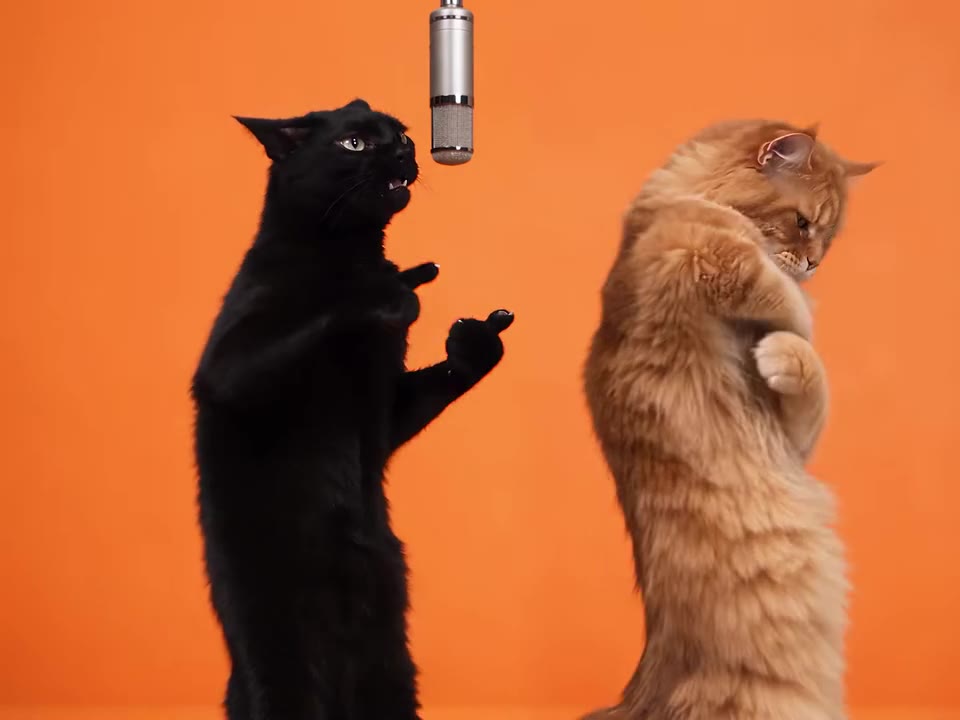
The AI wave is recent, but the scene has been remade as an audio-swap edit for years. AI recreations with cats, babies and footballers as rappers were on TikTok by early October 2026, and one of them passed half a million views. We have not confirmed a single original creator, so we do not credit one.
The reason it works is contrast. The battle is a serious, tense moment with a roaring crowd, and a cat or a baby standing in for the rapper turns tension into a joke at once. The format also needs no skill from the viewer: everyone knows the scene, so the punchline lands in the first second.
That is also why the same clip works for friends and coworkers. A face people know, placed in a scene they know, is the whole idea. Pets and celebrities are common in other people's posts, but the videosi page is made for one person's photo, not a pet, and the earlier rules apply when the face is a real person's.
What is the difference between a CapCut template and videosi?
CapCut templates called 8 Mile Rap Battle appeared from 19 October 2026. Tutorials show the same steps: copy the template link, pick one photo, export. A template is a fixed edit that drops your photo into the film's final battle. Some posts call it a filter, but it is not a live camera filter.
videosi gives the same 9-second result as a finished video from one photo. The difference is the route. You do not install CapCut, you do not hunt for the right template link, and you do not need a TikTok account. You upload a photo, pick a format and press Generate.
The other difference is how the swap is done. videosi uses ByteDance's Seedance video model, in the 2.0 or 2.5 tier you choose, with your photo and a 9-second reference scene. That is a generated video, not a cut-out pasted on a clip, so hair, clothes and skin tone come from your photo in every frame.
How long does it take?
Rendering takes a few minutes. The setup before it takes less than a minute: upload one photo, choose 9:16, 1:1 or 16:9, and press Generate. There is no prompt to write and nothing to edit afterwards, because the stage, the crowd, the microphone and the camera moves are built in.
Cost is clear before you start. The video is not free: there is no free generation and no free trial. A 9-second video (Standard model, 720p) is 10 credits, and better models and higher resolutions cost more. Credit packs start at $8.90 for 10 credits and never expire, and plans start at $29.90 a month. A failed render returns its credits.
Why not just describe the scene to any video model?
You can try it in Sora, Veo or Kling, but a plain description rarely gives the same result. Asked for "me in an 8 Mile rap battle" from scratch, a video model invents a generic stage and microphone. The four shots and the crowd do not repeat, so the clip no longer looks like the scene people recognize.
Without an identity swap the model also tends to keep the original rapper's face and only borrow your clothes. The videosi route avoids both problems because the motion comes from a matching reference clip, and the instructions say only which person is replaced by you.
Pasting the lyrics into a prompt does not help either. The mouth does not follow text, and the video stays silent until the battle sound is added, which is why the sound is attached to the finished clip.
Does the mouth follow the lyrics?
No. The mouth does not lip-sync to the verse. The clip shows the performance, with the stage, the crowd and the camera moves, and the original sound plays over it. For a comedy rap battle that is usually enough, because viewers recognize the verse and fill in the rest.
If you want a result that feels tighter, choose a photo with a neutral, slightly serious expression. A wide smile can look odd in the close-ups, while a calm face fits the tension of the scene.
The trend is still young. Our radar flagged it as budding on 17 November 2026, and the page went live on 20 November, so it is in the emerging stage. The film scene itself is a long-running edit format, so people keep remaking it with new faces. To try it, open the 8 Mile rap battle AI generator, upload one photo and see how the four shots look with your face.