Doja Cat Juicy AI is a 9 second dance clip in which one person grooves in a warm living room to the Juicy hook, and videosi makes it from a single photo of you. You upload one sharp photo, pick a format, press Generate, and get an MP4 with no watermark and one clean line of the song already on it.
This guide answers the questions people ask once they have seen the clips: why the video is so short, why the sound is just one line, how to shoot the photo, and how to post it honestly. It goes deeper than the FAQ on the trend page.
Key takeaways
- The clip is 9 seconds, built from five beats: step back, arms open, shoulder groove, the Juicy hook, and a point at the camera.
- The sound is one clean line, "I keep it juicy juicy, I eat that lunch", not the full song.
- A photo from the waist up, in daylight, with one adult in it, gives the best likeness.
- A 9 second Standard 720p video costs 10 credits, and a Single pack of 10 credits is $6.99.
- Label the finished clip as AI-generated when you post it.
In this guide
- Why does videosi use only one clean line of the song?
- How should I shoot the photo?
- Why is the video 9 seconds?
- Should I pick vertical, square or wide?
- Why do the lips not sing along?
- How does this relate to the 2019 Juicy challenge?
- Why can't I change the room?
- How do I post it with an AI label?
- Why do arms and hands drift, and what helps?
- What does one try really cost?
Why does videosi use only one clean line of the song?
Juicy is a real 2019 Doja Cat song, and most of its lyrics are about body parts. That is fine on a record, but it is not what most people want under a clip of themselves dancing in their living room, where family, coworkers and brands may all see it. So the video carries just one line of the hook, "I keep it juicy juicy, I eat that lunch", repeated on the beat for the full 9 seconds. The other lyrics are left out on purpose.
There is a second reason. When the full song is laid under a clip, you inherit every line of it, and you cannot easily trim one out. A single hook line is safe to post as it is, and it still tells viewers exactly which song the dance belongs to. If you want another part of the track, pick the Juicy sound inside TikTok or Instagram when you post. That is your choice on the platform, not something baked into the file.
How should I shoot the photo?
The dance is filmed from a fixed phone camera at chest height, so the model needs to know what your upper body looks like. A photo from the knees or waist up works best. A tight face selfie forces the model to invent your arms, shoulders and build, and that is where the clip stops looking like you.
Four habits make the biggest difference. First, use daylight from a window so your face, hair and skin tone are clear. Second, keep sunglasses, hats and heavy filters out, because they hide the features the model copies. Third, include only the one person who will dance, since a group shot or a collage can merge into one strange figure. Fourth, wear something you like. Whatever you wear in the photo, you wear in the video, and a bright top stands out nicely against the warm room.
The photo should show an adult who has said yes, which usually means you or a friend. The page is built for one person dancing, and videosi does not make this dance for minors.
Why is the video 9 seconds?
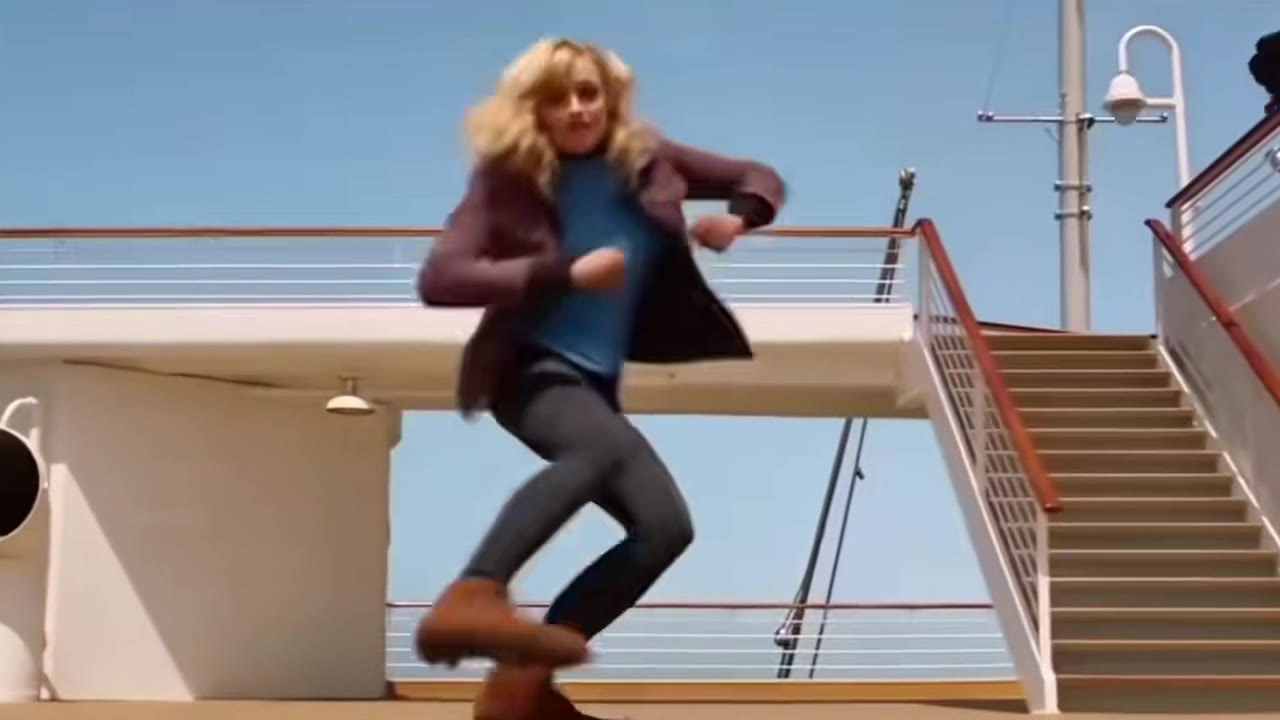
Because the dance itself is that long. The clip is built around five beats. In the first second the person steps back from the camera. From one to three seconds both arms sweep open and the knees start to bounce. From three to six seconds come shoulder rolls and small hand rolls in front of the waist, with the weight shifting side to side. From six to eight seconds the moves get bigger on the "I keep it juicy juicy" line, with a lean, a head tilt and arms swinging wide. In the last second an arm sweeps across and points at the camera with a grin.
That shape is a complete loop of a joke: setup, groove, payoff. Stretching it to 15 seconds would mean repeating moves, and repeating moves is how AI dance clips start to drift and blur. Nine seconds also fits every short video feed and keeps the cost at 10 credits for a Standard 720p render.
Should I pick vertical, square or wide?
For TikTok, Instagram Reels and YouTube Shorts, choose 9:16. It fills the phone screen and is what the feeds expect. Pick 1:1 if you plan to post to a grid or a chat group, where a square looks tidy in a preview. Pick 16:9 only if the clip will sit on a wide screen, such as a slide, a website or a TV.
You choose the format before you press Generate, and nothing else needs setting. The room, the dance and the camera are built in, so there is no prompt to write and no slider to tune. If you are unsure, go vertical.
Why do the lips not sing along?
The clip is a dance, not a lip sync. The rules for the render say no speech and no lip sync, and the reason is practical. Matching mouth shapes to a sung line while the whole body moves quickly is one of the hardest things for video models, and a mouth that is slightly off looks worse than a mouth that simply stays relaxed. The grin at the end reads as playful, and that is enough.
If you want a lip sync version, post the clip in TikTok or Instagram and use the platform tools, or leave the clip as the dance it is.
How does this relate to the 2019 Juicy challenge?
Juicy came out in 2019. According to Wikipedia, the solo version appeared on the deluxe edition of Amala on 1 March 2019, and the remix with Tyga followed on 15 August 2019 as the lead single from Hot Pink, reaching number 41 on the Billboard Hot 100. Juicy dance clips on TikTok go back to at least September 2019, when people made their own hand choreography to the hook.
The song came back into feeds in late October 2026. Clips from Doja Cat's tour were posted from 22 October 2026, reposts of her 2019 COLORS performance followed, and the videosi trend radar first saw searches for a Juicy AI version on 23 October 2026. So the AI clip is a new twist on an old dance, not the original challenge. We found no single original AI clip and no official TikTok filter for it as of November 2026, which is why the trend is still marked as emerging. If you want the full story of the trend, the Doja Cat Juicy AI page keeps it up to date. For background on the artist, see the Doja Cat entry on Wikipedia and the Juicy (Doja Cat song) entry.
Why can't I change the room?
The living room, the TV, the white doors and the chest-height phone camera come from the motion reference. That reference is what gives the clip its arm sweeps, shoulder rolls and the final point, with the timing of every move. Without it, a general video model tends to invent a generic dance and lose exactly the moves that make the clip read as Juicy.
The trade-off is simple. You get moves and timing that match, and in return the place is fixed. If you want a different dance somewhere else, the AI dance page turns one full-body photo of an adult into a short pop, hip-hop or silly dance.
How do I post it with an AI label?
Post the MP4 as it is and mark it as AI-generated. On TikTok, open the post screen, go to More options, and switch on the AI-generated content setting before you publish. Instagram and YouTube have similar disclosure options in their upload flows, though the exact wording and menu position change from time to time, so check the current screen.
Labeling matters for two reasons. It keeps you in line with platform rules on synthetic media, and it avoids confusion when the person in the clip is a real person who really can dance or really cannot.
Why do arms and hands drift, and what helps?
Likeness is never guaranteed, and fast arm moves and turns are where faces and hands drift most. Fast hand rolls can blur fingers, so hands may gain an extra finger or slip off the beat if the photo hides them. The prompt behind the render asks for five fingers per hand and one adult only, but it cannot fully fix a photo that gives no clues.
What helps is giving the model more to work with. Show your hands in the photo, rather than in pockets. Keep your face sharp and well lit. Wear clothes with clear edges, such as a jacket or a patterned top, so the arms read as arms. If the first try drifts, try a different photo before you change anything else, because the photo is the cause far more often than the dance. A failed, timed-out or blocked render returns its credits automatically.
What does one try really cost?
A 9 second Juicy video on the Standard model at 720p costs 10 credits. The Single pack is 10 credits for $6.99, so one try is one pack. Credits never expire, higher tiers cost more, and you pick the tier on the generator page. Rendering takes several minutes, and the finished clip is saved in My creations if you close the page.
Behind the scenes, videosi uses ByteDance's Seedance 2.0 family and Seedance 2.5. A short clip of the dance gives the moves and timing, and your photo gives the face, hair and clothes. If you are ready to try it, the Doja Cat Juicy AI generator needs only the photo and the format.