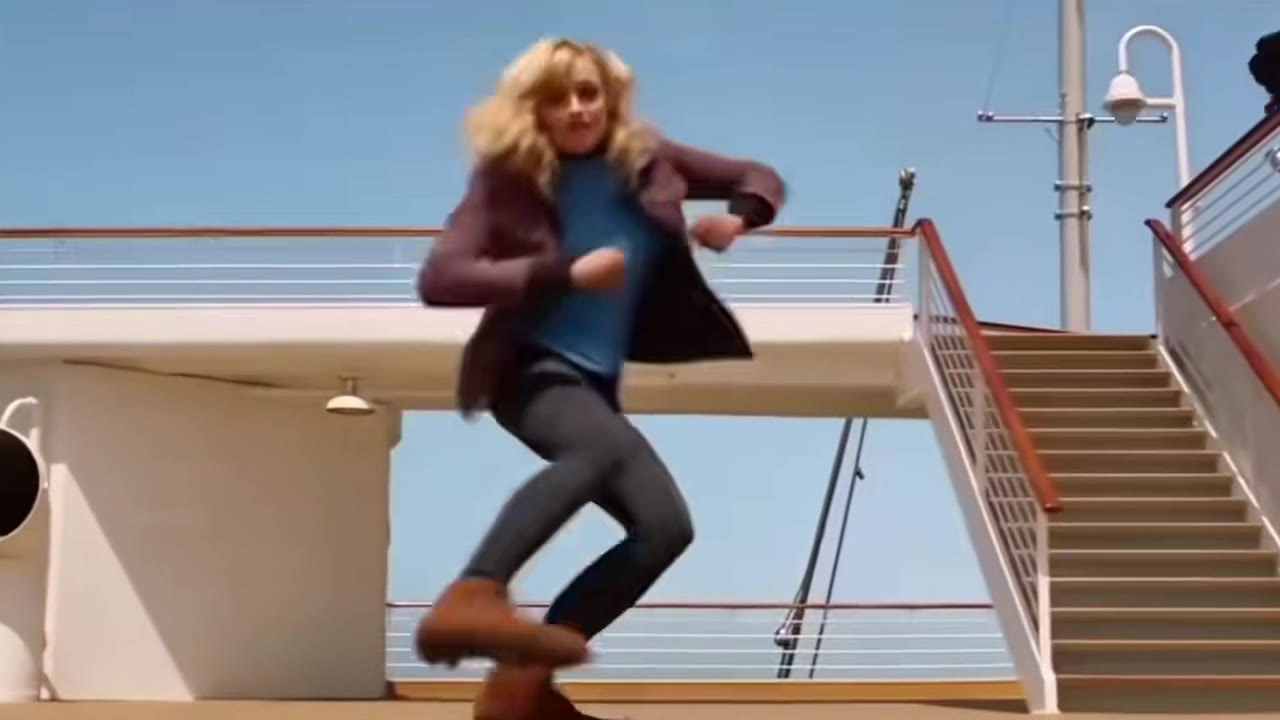
The deep sea AI video is a 5-second clip in which a person drops out of their photo into dark blue water and surfaces just as a giant sea monster with glowing eyes rises behind them. On videosi you make it from one photo of yourself, and the MP4 comes with sound already on it.
This guide answers the questions around the trend that the page FAQ does not: what is and is not the same "deep sea AI", why the scare is built the way it is, why faces drift in the water, and what to check before you post. Everything here describes the videosi version; we have not test-rendered this page yet, so treat likeness as a hope, not a promise.
Key takeaways
- The deep sea AI video is a 5-second photo effect: you fall into dark water and a glowing-eyed sea monster rises behind you.
- It is not the same as the people-free AI megalodon found-footage clips that also use the name "deep sea AI".
- Your photo supplies you only; the wall, the water and the monster come from the reference clip, and the video has original sound on it.
- The surfacing shot is where likeness slips, so use a sharp, front-facing photo from the waist up.
- A standard video costs 10 credits, packs start at $6.99, and you should label the post as AI-generated.
In this guide
- Is the deep sea AI video the same as the AI megalodon clips?
- Why does the monster only appear in the last seconds?
- What is thalassophobia and why does this clip lean on it?
- Why does the clip start in front of a white wall instead of my own background?
- Why can my face change once I am in the water?
- Which photo works best?
- Does the video have sound, and what song is it?
- Which format should I pick: 9:16, 1:1 or 16:9?
- How much does it cost, and how many tries should I plan for?
- Do I need to label a deep sea AI video on TikTok?
- Is the deep sea AI trend still worth posting?
Is the deep sea AI video the same as the AI megalodon clips?
No. The two get mixed up because both are called "deep sea AI", but they are different things. The photo effect starts with a real person in an ordinary photo and has them fall into the water. The other wave is AI found-footage: fake submarine or diver camera clips of megalodons and giant creatures, with nobody from a photo in them at all.
The earliest posts we found of the photo effect are dated 27 to 29 March 2026, from creators trying TikTok's own AI photo effects listed as "Deep Sea Horror POV" and "Deep Sea Drawn" (in Indonesian, "Ditarik laut dalam", pulled into the deep sea). Those test posts had a few thousand views each. The found-footage wave is much bigger and is what pushed searches for "deep sea AI" up.
If you want the version where you are the one who falls in, look for the effect with a person in it. That is the one videosi makes. If you want a pure monster clip with no person, that is a different kind of video and this page does not make it.
Why does the monster only appear in the last seconds?
Because the whole clip is one jump scare with a setup. The 5 seconds split into four beats: you stand smiling in front of a wall (0 to 1 s), the floor gives way and you fall face-first into deep blue water (1 to 2 s), you plunge under in a burst of bubbles while a huge shadow moves below (2 to 3 s), and you come up at the surface just as the sea monster with glowing yellow eyes looms behind you (3 to 5 s).
The monster stays out of sight until the end on purpose. The shadow under the water is the hint, the surfacing is the pause, and the glowing eyes behind your shoulder are the payoff. The joke works because you, in the foreground, have not noticed yet, or have just noticed and start grinning.
What is thalassophobia and why does this clip lean on it?
Thalassophobia is a lasting, intense dread of large, deep bodies of water such as oceans and seas. According to its Wikipedia entry, triggers include thinking about the ocean, swimming, scuba diving, submarines and sea creatures, and pictures or films about them. It is different from aquaphobia, which is about water in general.
The deep sea effect packs several of those triggers into a few seconds: open dark water, no floor under you, and something large moving below. The monster does not have to do anything. Its size and the empty water around you carry the scare.
Why does the clip start in front of a white wall instead of my own background?
The first second comes from the reference clip, not from your photo. Your photo supplies the person: face, hair, skin tone, build and clothes. The wall, the drop, the water, the bubbles and the sea monster all come from the clip the effect is built on, so they look the same in every video.
This is a trade-off. It is what keeps the timing exact: the fall happens in the same second every time, and the monster arrives on the same beat. A model that only had your photo and a text request would usually put you in the water from the first frame, and then the drop out of the photo, which is the joke, is gone.
Why can my face change once I am in the water?
Water is the hardest part for any video model. Wet hair clings, light changes, and the close-up at the surface is the longest look at your face in the whole clip. When the model is unsure, it can fall back on the person in the reference clip, a young woman with long brown hair and a black long-sleeved top, instead of you.
videosi tells the model to keep your face shape, hair colour and length, skin tone, build and clothes in every frame, wet or dry, and not to keep anything of the original person. That reduces the drift but cannot remove it. The surfacing shot at 3 to 5 seconds is the one to check first.
If the face looks wrong there, the usual cause is the photo. A blurry, dark or side-on photo, or one where sunglasses or a hat hide your eyes and hair, gives the model less to hold on to. Try a sharper front-facing photo before you change anything else. A failed, timed-out or blocked render returns its credits automatically.
Which photo works best?
A sharp, evenly lit, front-facing photo from the waist up, with a relaxed smile. The clip opens on your photo pose, so a smile makes the switch to the scare land better. What you wear in the photo is what you wear in the water.
Use one person only. Only one person falls in, so crop out friends before uploading, or the faces can merge. Skip sunglasses and hats, which slip or vanish when you go under. Plain, solid colours tend to read better than busy patterns once the clothes get wet.
Does the video have sound, and what song is it?
Yes. The file comes with the original sound of the reference clip on it, so you do not need to add music. There is no single song for the trend: each TikTok post carries its own sound, usually a dark ambient or horror track, and we have not identified one canonical track.
The model renders the picture and the sound is added to the finished file, so the audio and the five beats stay in step. If you prefer a different sound, you can swap it in the app you post to, and that app's own music rules then apply.
Which format should I pick: 9:16, 1:1 or 16:9?
Pick 9:16 for TikTok, Reels and Shorts, since the original effect was a phone-sized vertical video. The fall reads well in a tall frame: you drop down the screen and the monster rises into the empty space above your head.
Pick 1:1 for a feed post and 16:9 for a wide player.
How much does it cost, and how many tries should I plan for?
It is not free. A standard deep sea AI video (Standard model, 720p) costs 10 credits, and better models and resolutions cost more. Credit packs start at $6.99 for 10 credits and never expire, and plans start at $29.90 a month. A failed, timed-out or blocked render returns its credits.
On the model: videosi makes the clip with Seedance by ByteDance. ByteDance Seed describes Seedance 2.0 as a video generation model that takes text, image, audio and video as inputs, and it can use reference clips to control performance and camera movement. That reference-clip route is what keeps the drop and the monster in the right place.
For tries, plan on one clip if your photo is sharp and front-facing. If the surfacing face drifts, a second render with a better photo is a more reliable fix than rendering the same photo again. Keep the first result too; the Standard tier is the cheapest way to check a photo before you spend more on a higher tier.
Do I need to label a deep sea AI video on TikTok?
Yes, label it. TikTok's community guidelines on integrity and authenticity say creators must label AI-generated or significantly edited content that shows realistic-looking scenes or people. They also say unlabeled content may be removed, restricted or labeled by TikTok, depending on the potential harm.
A realistic video of a person falling into the sea is that kind of content. Switch on the AI-generated label when you post, and a line in the caption saying so keeps people from asking if you were really in the water. The monster is obviously not real, but your face is.
Is the deep sea AI trend still worth posting?
It is past its peak. Our trend tracker first saw the term on 16 October 2026 and marked it as fading on 27 October 2026, and the underlying TikTok effect is from late March 2026. We could not confirm whether the original effects are still in the app.
If you want to try it, open the deep sea AI video page, upload one photo, pick a format and press Generate.