The Quero Ver Na Hora H dance is a 15-second Brazilian funk routine made almost entirely of hand and arm moves, named after the TikTok sound it is danced to. On videosi you can get an AI version from one photo of yourself: pick a place, press Generate and download a silent MP4. The earliest clips we found were posted on 12 and 13 June 2026, and the person who first made up the steps is unconfirmed.
Key takeaways
- The routine has 7 beats over about 15 seconds, from a bounce and a visor salute to crossed arms and a rolling-hands finish.
- TikTok credits the most used version of the sound to DJ Pedrinho MPC, DJ Brizy and Cacau Chuu, and the AI video itself is silent.
- Crossed forearms and rolling hands are where AI video breaks first, so extra or merged fingers are the main thing to check.
- A standard 15-second video (Standard model, 720p) costs 13 credits, and there is no free generation.
- Add the sound on TikTok yourself, label the post as AI-generated, and only use a photo of an adult who agreed.
In this guide
- Which song is behind the Quero Ver Na Hora H dance, and who is credited?
- What does "hora H" actually mean?
- Where did the dance start, and how did it spread?
- Why is it called the Brazilian dance trend?
- How do the 7 beats break down for a beginner?
- Why do the tutorials use emoji move lists?
- How do I make it with other AI video tools, and why does it often fail?
- Why doesn't the AI face look like me?
- Which photo works best?
- What should I check before posting?
Which song is behind the Quero Ver Na Hora H dance, and who is credited?
The dance uses a Brazilian funk sound that carries the same name as the trend. TikTok lists two versions with different credits. The most used version is credited to DJ Pedrinho MPC, DJ Brizy and Cacau Chuu. A second version is credited to DJ Careca, DJ Flared, DJ Biell DN and Cacau Chuu.
That matters when you search, because people type the dance name, the song name and the DJ names interchangeably. They usually mean the same 15-second hand routine.
videosi does not include the song. The AI dance video is a silent file, so you add the sound inside TikTok or Reels under the platform's own music licence.
What does "hora H" actually mean?
"Hora H" is a Portuguese idiom for the decisive moment, the instant when something really counts. The full trend name, "quero ver na hora H", can be read roughly as "I want to see it when it counts". In Spanish the closest phrase is "a la hora de la verdad".
Here is the part that is easy to get wrong: the phrase is a name for the sound, not an instruction for the dance. Nothing in the 7 beats is a "decisive moment" move. For Portuguese captions, ask a Brazilian Portuguese speaker.
Where did the dance start, and how did it spread?
The earliest clips we found were posted on TikTok on 12 and 13 June 2026. Who first choreographed the steps is unconfirmed, and we would rather say so than name someone without proof. The dance took off in July, when step-by-step tutorials spread across Brazilian TikTok and then beyond Brazil.
The AI version is much newer. It started to appear in mid-October 2026, so at the time of writing it has only just begun to spread.
Why is it called the Brazilian dance trend?
Because the sound is Brazilian funk and many of the early clips came from Brazil, viewers outside the country started grouping it under a plain label: the Brazilian dance trend. Some clips are tagged that way. It is a loose search label, not an official name, and several different dances can sit under it in the same year.
The genre behind it, funk carioca, is a hip hop influenced Brazilian style that began in Rio de Janeiro's favelas in the 1980s, shaped by Miami bass and freestyle music.
How do the 7 beats break down for a beginner?
Think of the routine as seven short blocks, each a few seconds long, and learn them in order. The timings below come from the reference clip we use.
- 0 to 1.5 s, bounce in: face the camera with a small bounce, hands low at the hips, pointing down on the beat.
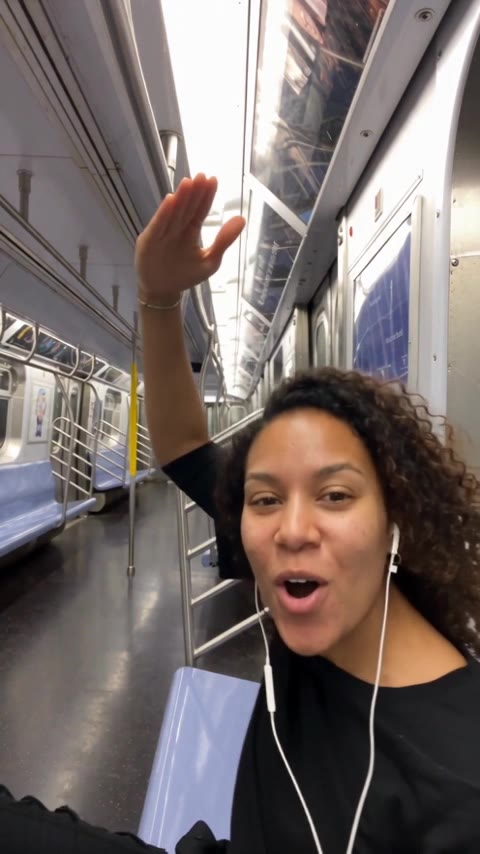
- 1.5 to 3 s, visor salute: one hand flicks up beside the head, then rests flat above the eyes like a visor.
- 3 to 5 s, face sweep: one arm sweeps across in front of the face, taps the chest and flicks out to the side.
- 5 to 7.5 s, overhead sweep: a big sweep over the head, a step to the side, small hand rolls and a quarter turn with a raised fist.
- 7.5 to 10 s, side sway: back to the camera, a relaxed sway with the hands crossing and uncrossing at the waist.
- 10 to 12 s, crossed arms: forearms cross into an X at the chest, rise in front of the face, then one arm shoots up.
- 12 to 15 s, rolling finish: quick rolling hands, one more arm cross and a still pose with a half-smile at the lens.
For a beginner, the trick is to ignore the feet. Your feet barely move, so practise the hands slowly in a mirror, then add the bounce. Keep the mood friendly and casual, like a dance among friends. If you would rather skip the learning, the trend page shows the same seven beats in a table next to a sample clip.
Why do the tutorials use emoji move lists?
Because the routine is hand work, and hand moves are easy to map to small pictures. A tutorial clip often overlays a row of emoji that stand for each gesture, so the viewer can follow along without hearing any spoken explanation.
It also creates a problem for AI. If a video model is shown a tutorial clip as a motion reference, it will happily copy the emoji, the username and the room along with the moves. That is why the videosi reference clip supplies only timing, gestures and camera distance, and why the prompt forbids text and emoji. If you try this elsewhere, strip or crop the overlay first, or expect your video to come back with floating symbols.
How do I make it with other AI video tools, and why does it often fail?
You can try it with Seedance, Kling, Sora or Veo if you have access, and the general recipe is the same: one photo for identity, a motion reference clip, a described place and a timeline of the seven beats. Photo plus motion reference to video is the mode that matters most, because it is the only way to get the exact gestures. The videosi version runs on ByteDance's Seedance, with Seedance 2.0 Mini as the default and Seedance 2.0 and 2.5 available as higher tiers.
The usual failures are predictable, and they are worth knowing before you spend credits:
- Without a motion reference, the model invents a generic sway, and the dance is only recognisable by its exact hand gestures.
- Crossed forearms and rolling hands are where AI video breaks first, so merged or extra fingers appear unless the prompt guards against them.
- Tutorial clips carry emoji move lists and usernames, and the model copies that text onto your video unless it is removed and forbidden.
- Each try costs credits and several minutes, and a 15-second clip at the top tier is the most expensive length to get wrong.
We do not publish the full prompt here. If you would rather not tune it yourself, the Quero Ver Na Hora H AI dance page has it built in, so you choose only the photo, the place and the format.
Why doesn't the AI face look like me?
Likeness is never guaranteed, and it drifts most right after an arm passes in front of your face. This dance is unusually hard on faces for that reason: the face sweep, the visor salute and the crossed arms all put a hand across the face several times in 15 seconds. Each time, the model has to re-draw what was hidden, and it can come back slightly different.
You can reduce the drift but not remove it. Use a sharp, front-facing photo, avoid anything covering the face, and expect that a few frames may look less like you than the rest.
Which photo works best?
A photo from the waist up or full body, facing the camera, with both hands visible and even light. The whole routine is hand and arm work, so a photo that shows your arms gives the model your real skin tone, sleeves and rings. What you wear in the photo is what you dance in.
Avoid sunglasses and face masks, because they make the likeness drift each time a hand crosses your face. A tight face crop is the most common mistake: with no arms in the picture, the model has to guess the rest of your body.
What should I check before posting?
Run through this short list before you publish.
- Label it as AI. The dance is generated, not filmed. Use the platform's AI-generated content label if it offers one, and say so in the caption.
- Add the sound on TikTok. The file is silent. Add the Quero Ver Na Hora H sound inside TikTok or Reels and line it up with the first bounce.
- Check the hands. Scrub through the crossed-arm and rolling-hand moments for extra or merged fingers.
- Get consent. Use a photo of yourself, or of an adult who has agreed. Photos of celebrities, public figures and minors are not accepted, and users must be 18 or older.
- Know what it costs. A standard 15-second video (Standard model, 720p) is 13 credits. Credit packs start at $6.99 for 10 credits, plans start at $29.90 a month, and there is no free generation. A failed render returns its credits.
Photos and results are deleted within 30 days, so download the MP4 you want to keep. When you are ready, start from the Quero Ver Na Hora H AI dance page, and keep the post honest: it is a playful AI dance, not a record of something you filmed.