The NASA detects motion on the moon meme is a parody, not news: a fake breaking-news clip in which a dust trail on the Moon turns out to be the poster or their car. This guide answers the questions people ask after they have seen it, from what "motion" means to how to post it without misleading anyone.
Key takeaways
- The joke is the reveal: the "motion" on the Moon is you or your car, and no real object was detected.
- It took off in April 2026, just after the Artemis II crew flew around the Moon.
- Add the Breaking News line yourself in your editing app, in your own words, with no real TV logo and no NASA badge.
- Label the clip as AI when you post it, so nobody mistakes it for a real report.
- The videosi version is a silent 12-second clip from one photo, so captions and sound are yours to add.
In this guide
- What does "motion" mean in the meme, and why is it funny?
- Where did the meme start and how did it spread?
- Why did it appear right after Artemis II?
- How do I add the Breaking News banner myself?
- Can I make it in other AI tools?
- Why does the AI put me in a spacesuit, or change my face in the wide shot?
- What photo works best for the car version?
- Is it okay to post a fake NASA news clip, and can it get flagged?
- What does real moon dust do, and why does AI get it wrong?
- Can I put myself at the Artemis site or next to astronauts?
What does "motion" mean in the meme, and why is it funny?
"Motion" is a deadpan news word for "something is moving". The joke is the gap between a solemn announcement about a silent, dead world and the silly culprit who turns up when the camera cuts to the surface.
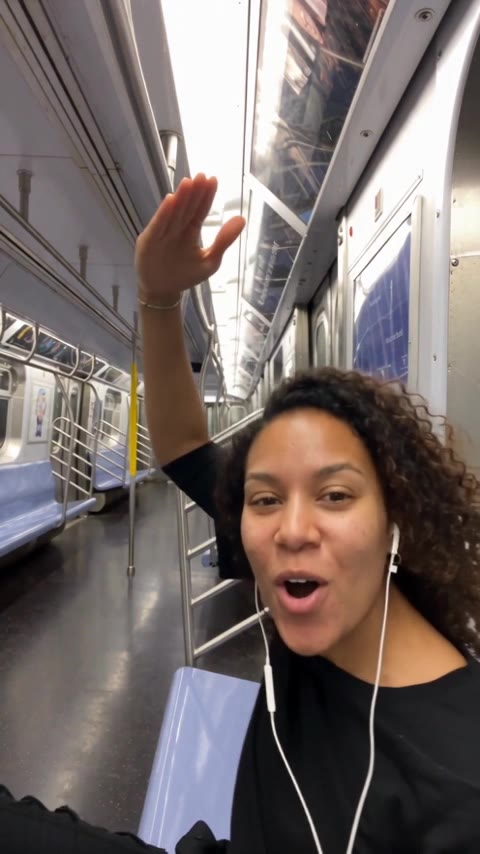
The structure does the work. First comes the serious part: space, a slow push toward the Moon, a dark trail crawling across the surface, and a line that sounds like an official alert. Then the hard cut: it is a person shrugging with both palms up, or a car sliding sideways through the dust. The reveal lands because the first half is played completely straight.
Some people also play on the rap slang "motion", but that is a side joke and the meme works without it.
Where did the meme start and how did it spread?
The earliest version we found was a TikTok posted on 16 April 2026 showing a pickup truck driving on the Moon. The person and friends version came later that month.
Here is the path we could trace:
- 16 April 2026: the earliest clip we found, with a pickup truck on the Moon.
- Late April 2026: tutorials titled "how to do nasa detects motion on moon trend" and a CapCut template spread the version with people and groups of friends.
- September and October 2026: new car and person versions were still being posted.
There is no single song attached. Most posts use their own original sounds, and a Playboi Carti link is unconfirmed, so do not repeat it as fact. An earlier post may exist that we did not find.
Why did it appear right after Artemis II?
Because the Moon was in the news. Artemis II was the first crewed flight around the Moon in this program, so "something is happening up there" was already a headline people recognized.
NASA's Artemis II mission page lists the launch from Kennedy Space Center on 1 April 2026, the crew of Reid Wiseman, Victor Glover, Christina Koch (NASA) and Jeremy Hansen (Canadian Space Agency), and a splashdown on 10 April 2026. The crew flew around the Moon on 6 April, coming within roughly 4,067 miles, and never landed. The mission page itself calls it a crewed lunar flyby.
That last point matters for the joke. Since nobody was on the surface, a vehicle or a person "moving" there is obviously absurd, and absurd is exactly what a parody needs. The memes started circulating about six days after splashdown, while the Moon was still fresh in the feed.
How do I add the Breaking News banner myself?
Add it as a text layer in the editor of the app you post from, and write your own words. videosi does not burn any banner or caption into the clip, on purpose.
- Download the silent MP4 and open it in CapCut, the TikTok editor, Instagram or any video editor.
- Add a text layer for the first 3 seconds. The lower third of the space shot is left empty so the line fits there.
- Draw a plain red or dark bar and write a short line such as "Breaking: something is moving on the Moon". Use a generic design.
- Add a sound, because the clip is silent.
Do not copy the logo, font set or lower-third style of a real TV channel, and do not name a real network or anchor. A fake banner that looks like a real broadcaster is what turns a joke into something misleading.
Can I make it in other AI tools?
You can try. General video tools such as Sora, Veo or Kling can produce a Moon shot, but getting the whole four-shot joke in one clip usually takes several attempts.
The recurring problems are these:
- No shot order. Without a reference video the model tends to start on the surface or show the person already in the space shot, which removes the reveal.
- Dust like smoke. The cloud swirls and billows like a sandstorm instead of rising and settling.
- Garbled banners. If you ask for a news bar in the prompt, you get unreadable text and sometimes something that resembles a real logo.
- Identity drift. Your face or your car changes between shots.
The NASA detects motion on the moon page handles the shot reference, the identity lock and the dust for you, so you upload one photo and get the clip. If you work elsewhere, plan on a motion reference clip and a lot of retries.
Why does the AI put me in a spacesuit, or change my face in the wide shot?
Models associate "person on the Moon" with a spacesuit and visor, and in a wide shot your face is only a few pixels, so the model fills in details it has to invent.
The spacesuit is the more annoying of the two, because a visor hides your face and kills the joke. In the videosi version the person stays in their own clothes with nothing over the face unless the photo already has it.
For the wide shot, give the model more to hold on to:
- Use a full-length photo, face to the camera, in even light.
- Skip sunglasses, masks and hats.
- Wear something that stands out against grey, such as a bright or white top.
Likeness is not guaranteed. If the wide reveal drifts, try a sharper photo, or regenerate; a failed or blocked render returns its credits.
What photo works best for the car version?
One clear daylight photo of the whole car from a three-quarter angle, with nothing cropped and no people in front of it. Shape and colour come from that single image.
- Show all four wheels and both ends of the car.
- Stand back far enough that the car fills most of the frame.
The number plate is kept unreadable in the output, which is better for privacy if you plan to post publicly. In the clip the car powerslides toward the camera, throws up a dust trail and rushes past the lens.
Cost is the same for both versions. A 12-second video is 10 credits on the Standard model at 720p or 5 credits at 480p. Credit packs start at $6.99 for 10 credits, plans start at $29.90 a month, and there is no free trial.
Is it okay to post a fake NASA news clip, and can it get flagged?
Yes, as clearly labelled parody. It can be flagged if it looks like a real report, so label it as AI and make the joke obvious.
Most platforms ask you to tag realistic AI-generated video, and most take down content that misleads people about real events. A clip about a fake Moon discovery can be read as misinformation if it is stripped of context, for example when someone re-posts it without your caption.
A safe approach:
- Use the platform's AI label when you post.
- Say it is a joke in the caption or a pinned comment.
- Do not use the NASA meatball or worm logo, any agency insignia, or a real news channel's branding or anchor.
Rules differ between platforms and change, so check the current guidelines of the one you post on.
What does real moon dust do, and why does AI get it wrong?
On the Moon there is almost no air and gravity is about one-sixth of Earth's, so kicked-up dust follows ballistic arcs and falls back, rather than hanging as a cloud. AI video tends to render it like smoke.
NASA's Moon facts page says surface gravity is about one-sixth of Earth's, that the Moon has only a very thin exosphere instead of a real atmosphere, and that nearly the whole surface is covered in loose, dusty rock debris called regolith. NASA's Moon overview also notes that the Moon's powdery surface presents challenges for human and robotic explorers.
Put together, that explains the usual AI mistakes:
- Billowing, swirling clouds: with no air to carry it, dust does not swirl.
- Slow-motion drifting that lingers: it falls back at lunar gravity, not Earth gravity.
If the cloud hangs and curls, the clip looks like a desert with a black sky painted on top.
Can I put myself at the Artemis site or next to astronauts?
Keep it a joke about you or your car. Do not add the faces of real astronauts or recreate real mission footage. The meme works best without them.
First, Artemis II did not land, so there is no Artemis II landing site to stand at. Second, using the likeness of Reid Wiseman, Victor Glover, Christina Koch or Jeremy Hansen in a fake news clip would put real people into an invented story, which is the opposite of an obvious parody.
The videosi clip shows at most a distant astronaut in a plain white suit with no patches, and no real person. That keeps the focus on the reveal and keeps the clip clearly fictional. Always label it as AI.