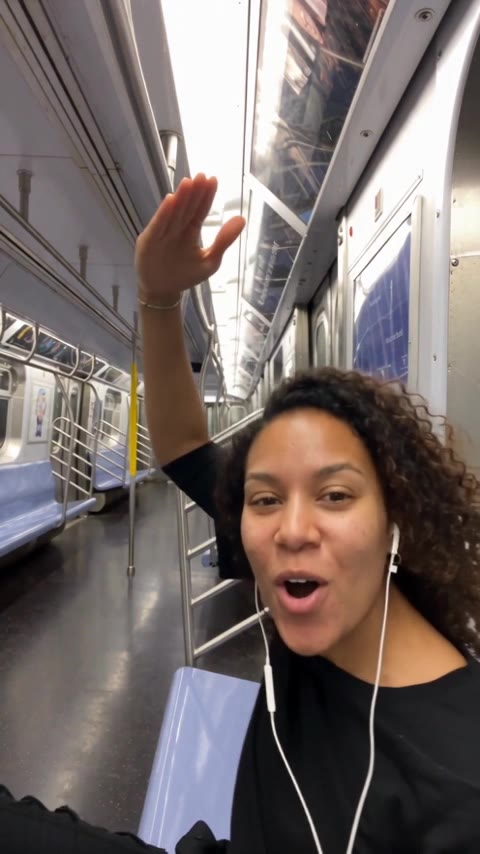
The metro phone trend is a short clip filmed by a phone stuck on the outside of a train window: someone sings to it on the platform, the train leaves, and they chase it. This guide answers the questions the trend page skips, from where the joke came from to what metro operators have said and how to make a safe AI version.
Key takeaways
- The trend took off on the Delhi Metro in early September 2026, and DMRC warned creators against shooting it on 5 September.
- The real stunt is risky; the AI version needs only one photo and no train.
- The hard part for any AI tool is keeping the camera locked to a moving train.
- Label the finished clip as AI, and do not suggest you taped a phone to a train.
- A 14-second standard 720p video costs 12 credits.
In this guide
- What does the metro phone trend mean, and why is it funny?
- Where did the trend start, and what happened on the Delhi Metro?
- Which song is used in the metro phone trend?
- Why is the real version dangerous, and what do metro operators say?
- How is the AI version different from the real one?
- Can I make it in ChatGPT, Sora, Veo or Kling?
- Why does the face not look like me in the chase?
- What should I check before posting an AI metro phone video?
- What is the Paris version with the Eiffel Tower?
- New York or Paris: which one should I pick?
What does the metro phone trend mean, and why is it funny?
The joke is a tiny three-act drama. In act one, someone performs to a phone that looks like it is stuck to a train window, usually with the full chest-clutching energy of a power ballad. In act two, the train leaves. In act three, they sprint down the platform after their own phone, losing the race in front of everyone.
It works because it is relatable and over the top at once: everybody has chased a departing train, and nobody has done it while mid-chorus. The camera is the punchline. Because the phone is glued to the outside of the carriage, the viewer sees the platform slide away and the performer shrink into the distance, which no handheld shot can show. The result is a very short story with a clear ending, and that is why it loops so well.
Where did the trend start, and what happened on the Delhi Metro?
It took off on the Delhi Metro in early September 2026. IBTimes India reported that Delhi creator Nikhil Kochar's reel helped make it famous, and said the clip had reportedly crossed 135 million views. That figure is a media report, not a number we could check ourselves, and the very first creator is unconfirmed.
The Delhi Metro Rail Corporation (DMRC) responded quickly. According to NewsGram, it posted a statement on Instagram on 5 September 2026 asking creators not to shoot such videos on Delhi Metro premises. The same report notes that DMRC had already banned reels and dance videos inside the metro after a directive in May 2023. After Delhi, versions showed up in New York, Spain and Paris, where the format picked up several names: subway iPhone tape trend, phone on the train, phone taped to the train and, simply, the metro trend.
Which song is used in the metro phone trend?
There is no single official sound. Going by captions and hashtags, many of the TikTok versions use Dua Lipa's Training Season, which suits a dramatic farewell to a train. Coverage of the Delhi reels, including the NewsGram report above, mentions the Bollywood song Zaalima as background music. We have not confirmed which track the earliest clip used.
The AI clip from videosi is silent on purpose. Music licensing differs by platform and region, so add a track from your app's own library when you post, and pick one with big feelings. The first eight seconds of the clip are a performance, and a song gives them a rhythm.
Why is the real version dangerous, and what do metro operators say?
A phone stuck to the outside of a moving train can come loose, hit someone on the platform or fall onto the track area. Running beside a departing train adds a second hazard: platform edges, gaps and crowds. The DMRC statement, as reported by IBTimes India, said such videos can inconvenience or even injure passengers and damage phones, and that necessary action would be taken against creators who shoot them on Delhi Metro premises. NewsGram's report mentions no specific fine, and neither do we.
For New York, Paris, Spain or anywhere else, the only honest answer is that rules differ, so check your local operator. We have not verified any other operator's position. This guide does not encourage anyone to try the real stunt. The AI version exists so the idea can be enjoyed without a train, a platform or a risk.
How is the AI version different from the real one?
On the metro phone trend page, one photo of you replaces the entire shoot. The phone, the platform, the train and the chase are generated, so nothing is taped to anything and nobody stands near an edge. The clip lasts 14 seconds, comes in 9:16, 1:1 or 16:9, and has no sound.
The real version has authenticity and risk; the AI version has control. You pick the city, the framing stays locked to the train, and the person in the video stays well back from the platform edge. What you give up is the surprise of a real crowd reacting. What you gain is a clip you can remake as often as you like, with no station staff to explain yourself to.
Can I make it in ChatGPT, Sora, Veo or Kling?
You can try, and the idea is simple to describe. The hard part is the camera. The shot only works if the viewpoint stays fixed to a moving train, so the platform slides sideways while the camera itself never turns. Most general video models drift toward the easy option: a floating camera, a train seen from outside, or the person standing inside the carriage. Any of those breaks the point of view the whole trend depends on.
What helped us was a structure, not a longer prompt. videosi runs on Seedance and uses a five-part layout: identity first, then a motion reference, then the city, then a second-by-second timeline, then rules such as never cutting and never leaving the platform. A motion reference clip is what keeps the camera glued to the train. If you work in another tool, expect several tries per result, because the start of the train has to land on the right beat.
Why does the face not look like me in the chase?
Because the chase is the hardest part for any video model. In the last five seconds you are running, motion blur is heavy, and you are small in the frame. At that size a model has few pixels to hold your face with, and it tends to swap in a generic one. Legs and hands can blur or drift as well.
Three things help. Use a clear, front-facing, well-lit photo where your face and outfit are fully visible. Avoid heavy filters, sunglasses and hats you do not want carried into the video. And pick an outfit that is easy to keep consistent, since a plain jacket survives the sprint better than a busy pattern. Failed or blocked renders return their credits, so a retry only costs you when a clip actually succeeds.
What should I check before posting an AI metro phone video?
Start with labelling. Nothing here was filmed on a real train, so mark the post as AI-generated using your platform's label, so no one mistakes it for the real stunt. Do not caption it in a way that suggests you taped a phone to a train, and do not film or imitate the stunt on any real transit system just because the AI clip looks easy.
Only use a photo of yourself, or of someone who has clearly agreed. Do not upload a stranger's picture or a creator's frame. The clip also shows no operator logos or readable station names, so keep it that way if you edit it afterwards. Finally, add your own music from the app library and check that the platform allows it.
What is the Paris version with the Eiffel Tower?
In Paris versions the clip often ends on the view from the moving train at night, with the Eiffel Tower lit up in the distance. It adds a romantic finish after a comic chase: you lose the race, then the city appears behind where you were standing. AI remakes of the format began appearing in October 2026, and the Paris ending is a common choice.
On videosi, the Paris option places the station in the evening under a curved white-tiled vault and finishes with the train climbing onto an elevated viaduct, with the golden-lit tower over the rooftops. It is a stylized scene, not a real station, and it carries no signs or branding.
New York or Paris: which one should I pick?
Pick New York for the grittier, funnier version. The platform is a night-time subway with white tile, steel columns and a yellow edge strip, and the clip ends in a dark tunnel with streaking lights. It suits a sillier performance and an audience that recognizes the subway trend by name.
Pick Paris if you want the cinematic ending and a softer, warmer look. It suits a love-song caption, a trip announcement or anything with a travel theme. Both options run the same 14-second timeline and cost the same.
A standard 14-second video (Standard model, 720p) is 12 credits. Credit packs start at $6.99 for 10 credits and subscriptions start at $29.90 a month, and there is no free generation. To start, upload a photo on the metro phone trend page, choose a city and a format, and wait a few minutes for the render.