Thriller dance AI is a 12-second Halloween video in which you, in zombie makeup, lead a horde of zombies through the Thriller dance. videosi makes it from one photo on the Thriller dance AI page, and this guide answers the questions people ask about the steps, the original scene, the look of the face and posting it in time.
Key takeaways
- The dance has five readable beats: a still stand, an arms-wide lean, clawed swipes, a side lunge with the head thrown back, and hip pops. Learn those and you can do it in a living room.
- The original zombie scene is a night street, a graveyard and a crowd that rises and dances together, which is why the AI version uses a horde behind you.
- If the face does not look like you, the cause is usually the photo or heavy makeup, not the dance.
- The videosi file is silent, 12 seconds, and costs 10 credits on the Standard model at 720p. Add the sound where you post.
- Halloween is 31 October, and a seasonal dance fades fast in November.
In this guide
- How to do the Thriller dance step by step?
- How to do the Thriller dance easy?
- What happens in the Thriller zombie dance scene?
- How to do the Thriller line dance?
- Are there Thriller dance moves for kids?
- What does the Thriller dance AI trend mean and where did it start?
- Can I make it in another tool?
- Why does the face not look like me, or vanish under the makeup?
- What should I check before posting it?
- What does one video cost?
- Continue reading
How to do the Thriller dance step by step?
Do it in five beats: stand still, lean with your arms wide, claw overhead, lunge sideways and finish on hip pops. The same five parts make up the 12 seconds in the videosi Thriller dance AI clip, so you can use it as a checklist for the real thing. Use this as a practice guide, not a copy of the original choreography, which this page does not try to reproduce move for move.
- Stand frozen (0 to 1 s). Arms hanging, face to the camera, head tilting slowly to one side.
- Hop and lean (1 to 4 s). A small hop onto one foot, both arms flung wide, then sway the whole body from side to side with one knee lifting.
- Claw swipes (4 to 7 s). Hands curled like claws, sweeping up and across overhead, left then right, shoulders popping with each beat.
- Side lunge (7 to 10 s). Step wide, throw your head back, kick one leg out and drag it back in along the floor.
- Hip pops (10 to 12 s). Wide stance, sharp hip and shoulder pops, one clawed hand at the hip, then stop on a pop.
Count each beat out loud. The stiff feel is the point.
How to do the Thriller dance easy?
Make it easy by learning only two things first: the lean and the claw swipe. Those two read as Thriller to almost anyone. Add the lunge and the pops once the first two feel automatic.
- Drop the footwork. Stay on the spot and let the arms and shoulders do the work.
- Slow it down. Practise at half speed and speed up when the sequence stops needing thought.
- Do the pops as a group. Hip and shoulder pops look sharper with a few people hitting the same beat.
If you only want the result and not the practice, the AI video gives you all five parts from one photo, with no rehearsal.
What happens in the Thriller zombie dance scene?
In the scene, a couple walks down a street at night, zombies rise from a graveyard and surround them, and the lead becomes a zombie and dances with the horde. That is the account on Wikipedia's page for the 1983 Thriller music video, which also lists the release date as 2 December 1983, John Landis as director and Michael Peters as choreographer. It says the shoot took place in Boyle Heights, Los Angeles.
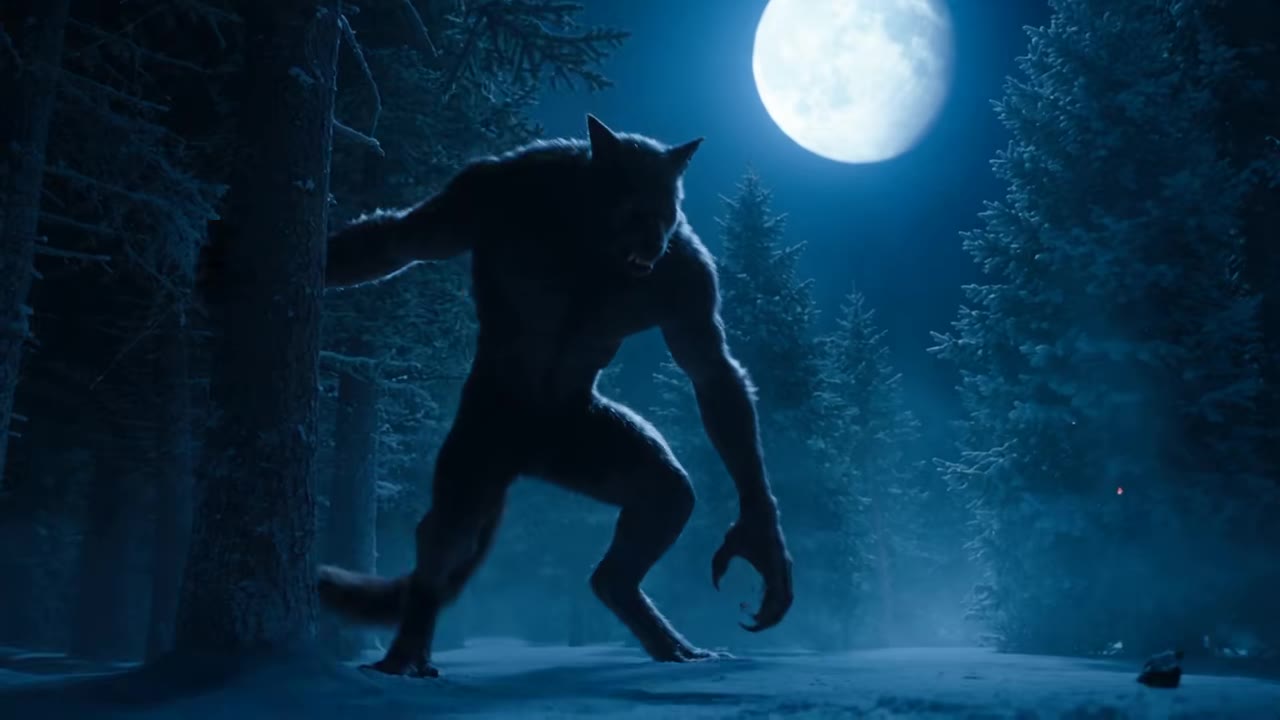
That setup explains the AI version. The crowd is the star as much as the lead, and the setting is a dark street or a graveyard with fog. videosi lets you choose between a moonlit graveyard, a foggy night street and a 1980s backstreet, with eight to ten zombies a few metres behind you. The AI clip borrows the idea of a horde dancing in sync. The moves come from a reference clip of a present-day dancer, not from the music video.
How to do the Thriller line dance?
Treat it as a group version of the same routine: everyone learns the same five beats and stands in rows or a loose wedge facing the same way. Staying in sync matters more than doing each move perfectly, which is why the AI zombies stand behind the lead and copy every beat a fraction stiffer.
Group performances of the dance are also an established Halloween tradition. Wikipedia describes Thrill the World as an annual event in which people perform the zombie dance from the music video at the same time in places around the world, held on the Saturday before Halloween. You can read about it on the Thrill the World page.
- Agree on one count, and have one person lead.
- Stand in two or three rows with arm's length between people.
- Rehearse the still stand at the start and the stop on the last pop, because a group falls apart there first.
Are there Thriller dance moves for kids?
Yes, children can learn the real dance, and it suits a school Halloween party. The five beats above work at any age if you slow them down and drop the lunge. A group of children doing claw swipes and the lean in a row is the easiest version to teach.
The AI video is a different matter. videosi accepts only adults aged 18 or older and does not accept photos of minors, so it cannot make a Thriller dance AI clip of a child. Kids can learn and film the real routine themselves, and an adult can make an AI version of their own photo.
What does the Thriller dance AI trend mean and where did it start?
The trend means a Halloween video in which the Thriller zombie dance is performed by an AI character or by an ordinary person turned into a zombie, usually leading a crowd of zombies. The dance itself dates from the 1983 Thriller music video. The AI version only began spreading in October 2026.
The details are not settled. We have not confirmed a single original creator, an exact start date, a hashtag or any view counts, so we do not claim them. What is clear is the format: a low, steady camera, a night setting and a crowd moving together.
This is not the same trend as the Zombie AI Trend, which is a two-person zombie love story and not a dance. If you want to keep your face human, the Spooky Scary Skeletons AI page is the better fit.
Can I make it in another tool?
You can try, but a general video model needs a lot of care to get this right. Four things tend to go wrong when you ask for a zombie dance from scratch.
- Your whole face gets painted over with rot and gore, so it stops being you.
- With no motion reference, the dance becomes a generic shuffle without the lean and the pops.
- The background zombies drift forward, merge with you or multiply.
- The model adds a red jacket and a single glove because it has seen them with the word Thriller.
videosi handles these inside the setup: your photo is the only source for the face, hair and outfit, a real dancer's clip supplies the moves, and the number and position of the zombies is fixed. It runs on ByteDance's Seedance model. Our Thriller dance AI page shows the structure of the instructions without publishing the full text.
Why does the face not look like me, or vanish under the makeup?
It happens because the zombie makeup changes your skin tone and the model has to decide how much of you to keep. When the photo is weak, the model leans on a generic zombie face instead. The usual causes are a face-only crop, sunglasses or a mask, a dark photo, or makeup already on your face.
- Use a front-facing, full-body photo in even light.
- Take the makeup off first. The AI adds pale grey-green makeup and dark eye shadows on top, so a photo with your own heavy zombie paint doubles up.
- Keep the outfit simple. Torn hems are added for you, and fussy details can shimmer.
- Expect some drift. Likeness is not guaranteed, and a clip that fails or is blocked returns its credits, though a result you simply dislike does not.
What should I check before posting it?
Check three things: label it as AI, sort out the music, and mind the date. Label the clip as AI-generated where the platform lets you, because viewers will otherwise assume it is real footage. Use the platform's own sound library for music rather than uploading a track you do not have rights to. The videosi file has no audio at all, so you add the sound in TikTok, Reels or Shorts under the platform's licence.
The date matters most. Halloween is 31 October, and a seasonal dance loses attention quickly once November starts. Make the video a few days ahead, render a second version if the first has a glitch, and post before the 31st. Because the trend only began in October 2026, we cannot offer reliable numbers on how long the attention will last.
Finally, use only your own photo or the photo of an adult who agreed. videosi does not accept photos of celebrities, public figures or minors.
What does one video cost?
One standard 12-second video costs 10 credits on the Standard model at 720p. Credit packs start at $6.99 for 10 credits and plans start at $29.90 a month. There is no trial and no refund, but a render that fails returns its credits automatically. Better models and higher resolutions cost more, and the exact figures are on the pricing page.
If you want the clip and not the experiment, open the Thriller dance AI page, upload one photo, pick a place and press Generate.