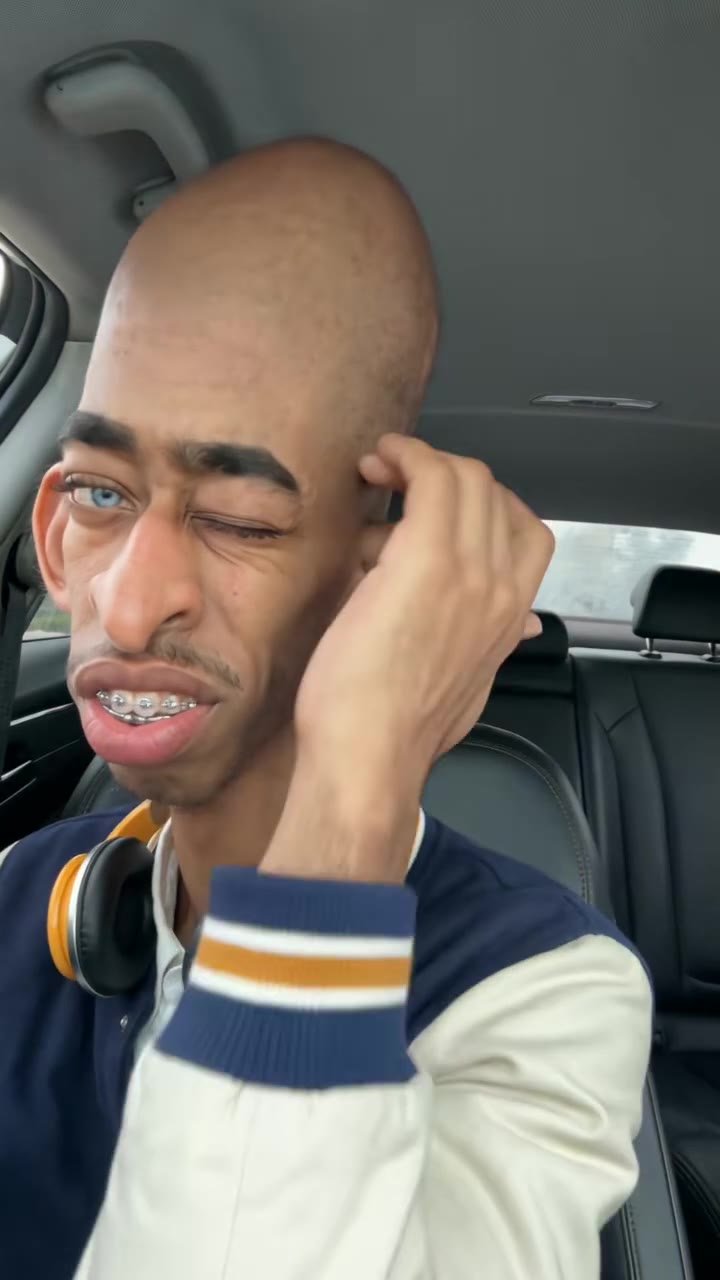
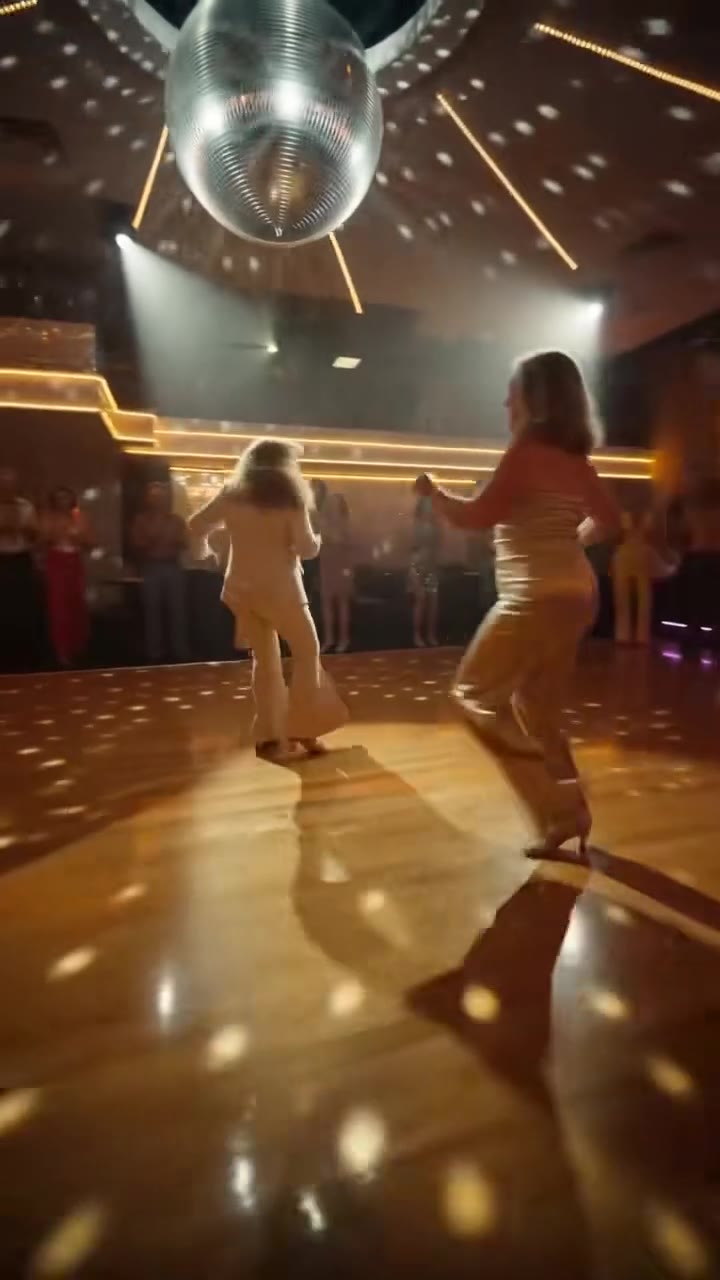
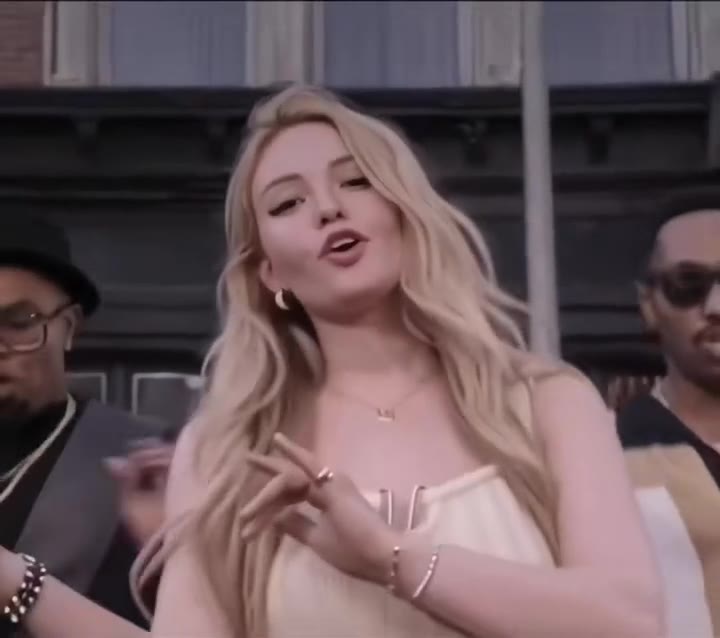
The can can dance AI trend is a short video in which a photo of you becomes the lead dancer of a French cabaret kickline, with an arms-up opening, a twirl and high front kicks. On videosi you get that 12-second clip from one photo and no prompt, with the can-can music already on it. This guide goes past the basics: the dance's history, why AI struggles with it, which photo to use and how to post the result.
Key takeaways
- The cancan is a 19th century Paris dance, and its famous tune is the Galop infernal from Offenbach's 1858 operetta Orpheus in the Underworld.
- High kicks and a swirling skirt are exactly what AI video models get wrong when you only type a prompt, so videosi uses a motion reference.
- One sharp, well-lit photo of one adult, with face and most of the body in view, gives the best likeness.
- A standard 12-second video (Standard model, 720p) costs 10 credits; there is no free generation.
- The trend is early: our radar first caught it on 2026-10-23, and it has only just started spreading.
In this guide
- Where does the cancan come from?
- Why is the Galop infernal the cancan song?
- Who danced the cancan, and can a man do it in the AI version?
- Why is the cancan so hard for AI video?
- Which photo gives the best can-can video?
- What happens in the 12 seconds?
- How is this different from a CapCut template?
- How do I caption and post it?
- Do I need to label it as AI, and whose photo can I use?
- How early is this trend, and what does it cost?
Where does the cancan come from?
The cancan most likely grew out of the final figure of the quadrille, a social dance for four or more couples, in the 1820s and 1830s. Its exact origin is unclear. Wikipedia suggests the acrobatic entertainer Charles-François Mazurier, whose 1825 hit was Jocko, or The Brazilian Ape, may have inspired some of the steps.
By the 1840s it was a popular music-hall dance, and by the 1890s professional dancers such as La Goulue and Jane Avril could make a full-time living at the Moulin Rouge. Toulouse-Lautrec painted and drew posters of them, which is why the vintage poster look on our page feels so natural. The "French Cancan" as a staged number is credited to Pierre Sandrini in the 1920s.
That history is the reason the trend works as a costume party: the corset, the layered skirt and the stockings are not invented for AI, they are the stage uniform of a real dance. Our can can dance AI page lets you pick a spotlight cabaret, a Belle Époque hall or a vintage poster to match.
Why is the Galop infernal the cancan song?
The tune is the Galop infernal from Jacques Offenbach's Orpheus in the Underworld (Orphée aux enfers). The operetta premiered on 21 October 1858 at the Théâtre des Bouffes-Parisiens in Paris, and a larger four-act version followed on 7 February 1874.
The link to the dance came later. Wikipedia notes that in the last decade of the 19th century the Moulin Rouge and the Folies Bergère used the galop to accompany the cancan, and the two have been tied together ever since. A small caveat from the same source: a galop is technically a different dance, so the pairing is a stage tradition rather than something Offenbach wrote for the kicks.
On videosi the finished MP4 comes with the can-can music on it, lined up with the kicks. Nobody sings or speaks in the clip.
Who danced the cancan, and can a man do it in the AI version?
Men first. In the 1830s groups of men, especially students, danced it in public dance halls, and a few male stars performed it from the 1840s to 1861. Later the dance became associated with chorus lines of women, and women performers became far better known. Valentin le Désossé was the most prominent male cancan dancer of the 1890s and often partnered La Goulue. An all-male troupe, the Quadrille des Clodoches, even performed in London in 1870.
So a man in the line is not a joke on the tradition, it is part of it. On videosi, if your photo shows a man and you pick the costume option, he gets a showman outfit: a striped waistcoat, a bow tie, rolled sleeves and black trousers. You can also keep your own clothes from the photo. Either way the page makes one adult per video, and only with that person's permission.
Why is the cancan so hard for AI video?
Three things go wrong at once. First, the legs: a high front kick is a fast, large motion that crosses the skirt, and a model that only reads text tends to settle for a slow sway. Second, the skirt: layered ruffles swirling during a twirl hide the legs and change shape every frame. Third, the face: during a 2-second spin the face turns away from the camera and comes back, and that is where likeness drifts most.
videosi handles this with a Seedance video model (ByteDance's Seedance 2.0 Mini by default, with Fast, Pro and Seedance 2.5 Ultra one click away) and a five-part structure that swaps the lead dancer of a real 12-second kickline reference for you. The reference carries the timing and the kicks, your photo carries the identity. The prompt itself is built in and not published, and you never have to write it. Likeness is still not guaranteed, and the fastest kicks and the twirl are where you may see drift.
Which photo gives the best can-can video?
Use one sharp, well-lit photo of one adult, with the face and most of the body in view. A face-only selfie gives the model nothing to build the body from, and sunglasses, a group shot or a dark, blurry picture are the usual reasons the dancer does not look like you.
A few practical habits help:
- Stand facing the camera in even light, hair visible, no hat covering the face.
- Pick a plain background so the model does not mix it into the stage.
- If you choose your own outfit mode, wear something that reads clearly in the photo, because the clothes are copied from it.
- Upload JPG, PNG, WEBP or HEIC up to 10 MB.
What happens in the 12 seconds?
The clip follows six beats. From 0 to 1.5 seconds three dancers stand in a line under pink and white spotlights with arms raised and knees lifting, you in the middle. At 1.5 seconds the arms open and the whole line kicks to the front together. At about 3 seconds the camera cuts closer to you mid-jump, smiling at the lens.
From 4 to 7 seconds you spin across the stage with the skirt flaring out. From 7 to 10 seconds you hold the skirt in both hands and kick high again and again as gold sparks hit the floor. The last two seconds are a final high kick and a grin as the music reaches its peak. The backup dancers are fictional AI people and change from video to video.
How is this different from a CapCut template?
CapCut has offered "can can dancer" photo templates since about May 2026, where a photo of a pet, a baby or an adult dances to a remixed sound. Those templates change or disappear often, and you work inside the editor with whatever the template gives you. videosi is not affiliated with TikTok or CapCut.
What videosi does differently is generate a new video rather than fill a template: you pick the stage and the outfit, you choose 9:16, 1:1 or 16:9, and a video model renders you into a full kickline with the can-can music on it. The cost of that is time and credits: rendering takes several minutes, and the result is saved in My creations.
How do I caption and post it?
The video is already the joke, so keep the caption short and let the first second carry it. Good angles are a plain "POV: you joined the Moulin Rouge", a caption naming the occasion (a birthday, a hen party, a team celebration), or a tag for the friends who should be in the next line.
Some tips that cost nothing:
- Post 9:16 for short-video feeds and 16:9 if the clip goes on a website or a slide.
- Keep the can-can audio on, since the music is half of the recognition.
- Make two or three versions with different stages and post the one that lands, because the same photo gives a different video each time.
- Do not claim the clip is a real performance.
Do I need to label it as AI, and whose photo can I use?
Label it. Most social platforms ask for AI-generated content to be marked, and a one-word note in the caption is the simplest way to stay honest and avoid confusion. We do not publish platform rules here, so check the current guidance of the app where you post.
On the photo, use your own, or a friend's or partner's with their agreement. The page does not accept photos of children or of people who have not agreed, and it keeps the dance to the classic playful stage style: fully costumed adults, not sexual, and it will not make revealing or suggestive versions. The MP4 has no watermark, so the responsibility for how it is shared is yours.
How early is this trend, and what does it cost?
It is very early. Our trend radar first flagged "can can dance ai" as a new search on 2026-10-23, and it has only just started spreading. AI can-can clips had appeared on TikTok earlier in 2026 and a CapCut template spread in May and June, but we have not found a single original post, so we do not name an origin or give view counts. A video posted now is ahead of the wave, not behind it.
On price, there is no free generation and no free trial. A standard 12-second video (Standard model, 720p) is 10 credits. Credit packs start at $6.99 for 10 credits and never expire, plans start at $29.90 a month, and a failed, timed-out or blocked render returns its credits. When you are ready, make yours on the can can dance AI page: one photo in, a cabaret kickline out.
Sources: Wikipedia, Can-can; Wikipedia, Orpheus in the Underworld.