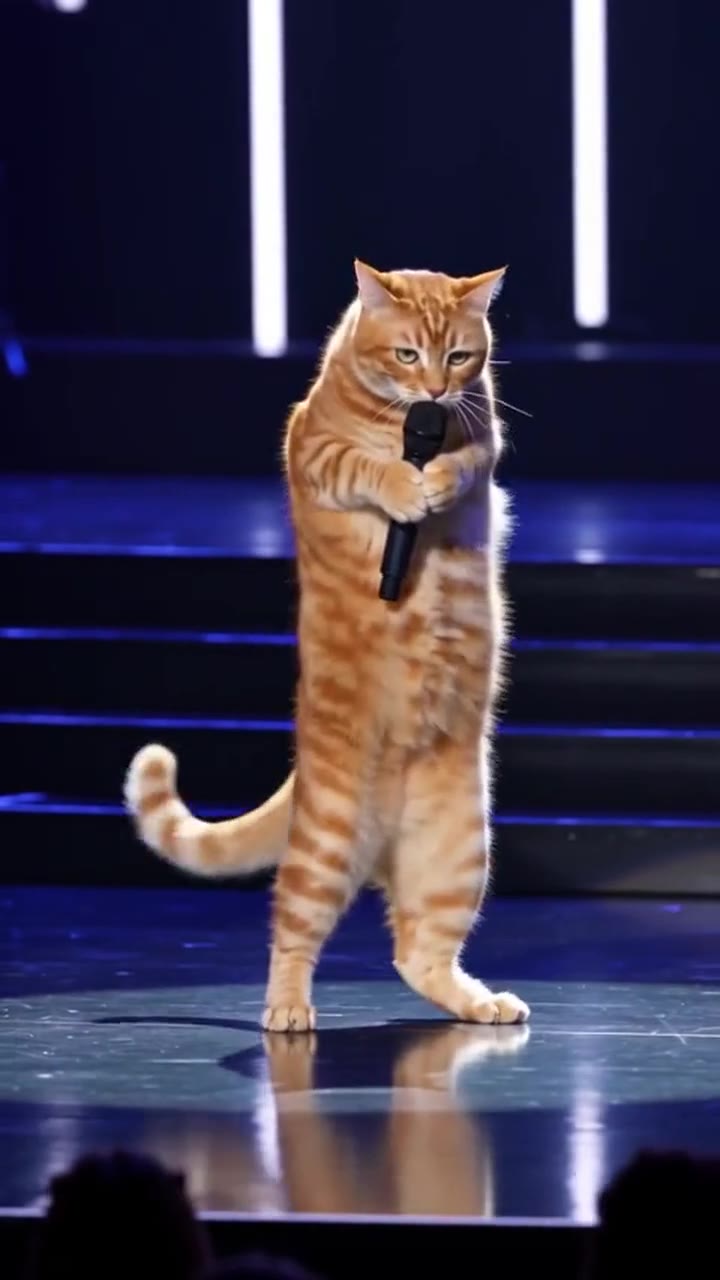
The bottle kick challenge AI clip is a 9-second video in which your cat or dog stands on its hind legs, spins a high kick at a water bottle, misses and yowls. You make it from one photo of your pet, with no filming and no prompt to write. This guide goes deeper than the basics: why the miss is the joke, how the setups differ, which photo to pick and what to do before you post.
Key takeaways
- The AI clip borrows its name from the 2019 Bottle Cap Challenge, but nothing in it is filmed.
- Two setups end in a miss and the stacked bottles setup ends in a knockdown, so pick the outcome you want.
- A sharp photo showing the face, ears and legs matters more than anything else.
- A standard 9-second video (Standard model, 720p) is 8 credits, and failed renders return them.
- Label the post as AI-generated before you publish.
In this guide
- Why is the pet supposed to miss the bottle?
- How is the AI version different from the 2019 Bottle Cap Challenge?
- What is the difference between the three setups?
- Which setup suits which kind of pet?
- What kind of photo gives the best kick?
- Why does the face change during the spin?
- Why does the clip need a motion reference instead of a text prompt?
- Should I try this with my real pet?
- How many tries should I budget for?
- How should I post it?
Why is the pet supposed to miss the bottle?
The miss is the joke. In the 9-second clip your pet squares up with total confidence, winds up, throws a huge spinning kick and the bottle never even wobbles. Then comes the yowl and the backward hop. The comedy lives in the gap between how serious the stare-down is and how badly the kick lands.
That is why two of the three setups on the trend page end in a clean miss: the kick sails just past the bottle on the washroom sink and swings over it on the living room table. Only the stacked bottles setup lets the kick connect, and even there it only clips the top bottle. A perfect hit would be a different, less funny video.
How is the AI version different from the 2019 Bottle Cap Challenge?
The 2019 challenge was a real stunt. According to BGR, people tried to unscrew a bottle cap with a roundhouse kick that grazes the loosened cap just enough to twist it off, and it reportedly started in martial arts circles. DOGOnews dates it to late June 2019 and says it picked up speed in early July.
The 2026 version keeps the kick and drops everything else. Nobody films a person, nothing needs a loosened cap, and the performer is an animal that stands up like a martial artist. The earliest AI clip we found, a black cat in a washroom, is dated 4 October 2026. Who made it first is unconfirmed, and the 2019 stunt is only the name it borrowed.
What is the difference between the three setups?
Each setup is a complete scene with its own room, light and outcome. The washroom sink copies the original: pale grey walls, flat daylight and one clear plastic bottle with a plain blue label on a counter. The living room table is warmer, with a beige sofa, lamps and a round wooden side table. The stacked bottles setup puts two juice bottles on a small wooden box against a warm grey wall.
Choose by the result you want. Sink and table give you the classic whiff. Stacked bottles give you a payoff, because the top bottle topples off and rolls across the box while the bottom one stays standing. The bottle is always rigid and keeps its shape, so nothing shatters or sprays.
Which setup suits which kind of pet?
Think about contrast. A black or dark pet reads best against the pale washroom, which is also the closest match to the original. A white or light pet stands out against the warm living room, and against the grey wall behind the stacked bottles. A ginger or tabby works almost anywhere, as long as its markings are sharp in your photo.
Cats match the original most closely, but the same clip works for a dog or another pet. The generator keeps the species, size and markings from your photo, so a terrier stays a terrier and does the kick at its own size.
What kind of photo gives the best kick?
The kick is all legs, so the photo should show them. Pick one sharp picture of one animal, with the face, both ears and as much of the body as you can, in even daylight. A pet that is sitting up or standing gives the model real hind legs to work with, while a pet curled in a basket leaves it to guess.
Do not crop two animals into one frame, because the model may merge them. Stripes, a white chest, socks and odd-coloured eyes are what make the kicker recognisably yours, so check that they are in focus before you upload. Photos can be JPG, PNG, WEBP or HEIC up to 10 MB.
Why does the face change during the spin?
The spinning kick is the hardest second and a half of the clip. The head turns, the body rotates, the mouth starts to open for the yowl and the legs move fast, all at once. Faces drift most at that moment, and long-haired cats and dogs with long snouts drift the most. Extra toes or merged paws can also show up in the fastest frames.
Likeness is never guaranteed. If the first result is off, change the photo rather than repeating the same one: a clearer face, a view of both ears, one animal only. A different setup can also help, since the background changes how the model separates the fur from the scene.
Why does the clip need a motion reference instead of a text prompt?
A text description such as a cat stands up and kicks a bottle leaves the timing to the model, and it rarely finds the right one. You tend to get a paw waved at the bottle, a pet that never stands, or a kick with no wind-up. The clip works because of its five beats: stare-down, wind-up, spinning kick, miss or hit, and the backward hop.
On videosi those beats come from a 9-second motion reference that supplies only the stance, the kick, the landing and the camera height. Your photo supplies the identity and nothing else. Without that split the model tends to turn your pet into the black cat from the original. We do not publish the full prompt, but the structure is simple: identity lock, motion, scene, timeline and rules.
Should I try this with my real pet?
No. A pet cannot stand on its hind legs and throw a spinning kick on cue, and trying to coax it into a stance could hurt it or frighten it. The AI route exists so that nobody has to. Your pet is a photo, and the model draws a standing, kicking version.
The 2019 guidance is a useful contrast. The sources above recommend a plastic bottle so nothing breaks if it is knocked over, and a bottle at chest height or lower. In the AI clip the bottle is a plastic one too, but the safety question is gone because there is no real kick and no real animal in the room.
How many tries should I budget for?
A standard 9-second video (Standard model, 720p) is 8 credits, and a failed, timed-out or blocked render returns its credits. Better models and higher resolutions cost more. Credit packs start at $6.99 for 10 credits and never expire, so one pack covers one Standard video with 2 credits left over. Plans start at $29.90 a month.
A sensible plan is one video per setup. Make the washroom version first, then decide if you want the table or the stacked bottles. If the face drifts, spend the next try on a better photo instead of the same one again. Several minutes of rendering per try is normal.
How should I post it?
The MP4 is silent and has no watermark, so the sound is your choice. A scream, a dramatic sting or a martial arts hit all fit the yowl at 4.5 seconds. No single sound is attached to this trend, and the posts we checked in October 2026 use their own original sounds.
Label the post as AI-generated in the app you post from, because a pet standing up and kicking can look like real footage at a glance. A one-line caption saying the pet is AI-generated is a good second layer. Do not credit an original creator by name, since the first clip's author is unconfirmed. For the other pet roles, see cat clapping AI, or return to the bottle kick challenge AI page to make yours.